
World Cup 2026 Betting Markets Explained: Every Market Aussie Punters Can Back
 Available in US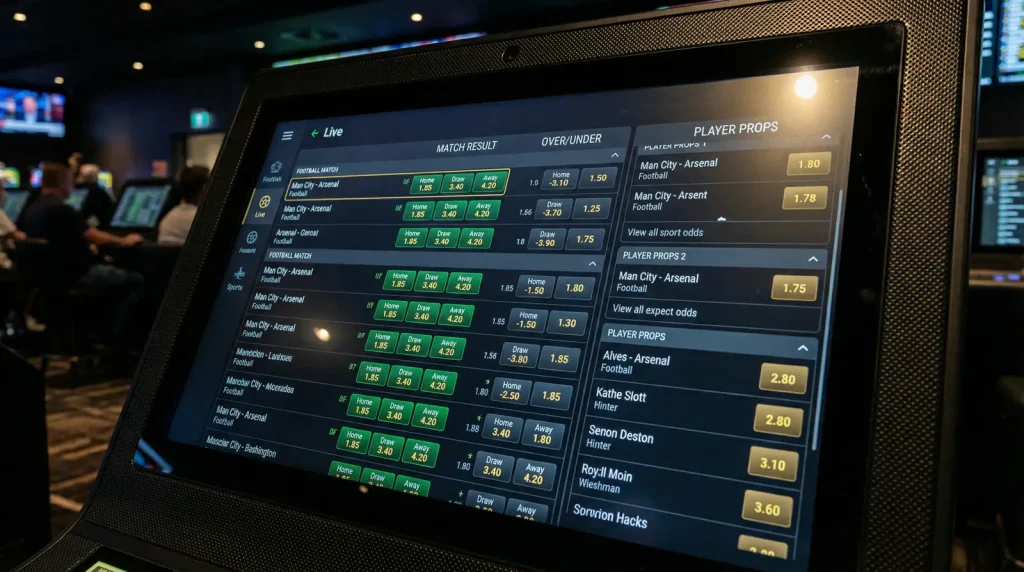
When Qatar 2022 kicked off, I had a mate who’d only ever bet on the NRL. State of Origin, Grand Final, maybe the occasional Melbourne Cup flutter. He wandered onto Sportsbet for the World Cup opener and froze — the screen showed over forty different markets for a single match. Head-to-head, draw no bet, Asian handicap, correct score, half-time result, both teams to score, corners, cards, player props stretching into the dozens. He backed Argentina to win at 1.35 because it was the only bet he understood. Argentina lost 2-1 to Saudi Arabia, and his first World Cup punting experience ended in confusion and a fifteen-dollar hole.
That confusion needn’t repeat itself for the 2026 World Cup. With 104 matches across 39 days — the biggest tournament in FIFA history thanks to the 48-team expansion — understanding World Cup betting markets separates punters who profit from those who donate. The markets themselves aren’t complicated once you understand the underlying logic. This breakdown covers every significant market you’ll encounter as an Aussie punter, from the straightforward match result bets through to tournament specials that won’t settle until July 19 when the final whistle blows at MetLife Stadium.
Head-to-Head and Match Result Markets
The foundation of all football betting sits right here. Match result — sometimes called 1X2 or head-to-head — asks one question: who wins, or does the match end in a draw? Three outcomes, three prices. The home side is typically listed first (1), the draw sits in the middle (X), and the away side completes the trio (2). At the World Cup, where “home” and “away” mean little beyond which side of the stadium allocation, the format usually lists the first team in the fixture as 1.
Consider Australia’s opening match against Turkey in Vancouver on June 14. Pre-tournament markets might offer something like Australia 2.80, Draw 3.30, Turkey 2.60. These decimal odds tell you exactly what a winning dollar returns. Back Australia at 2.80 with a fifty-dollar stake and you receive one hundred and forty dollars if the Socceroos win — your fifty-dollar stake plus ninety dollars profit. If Turkey win or the match draws, you lose the fifty dollars. No complexity, no conditions, just pick the correct outcome.
The draw deserves specific attention because it’s chronically undervalued by casual punters. Group stage football historically produces draws at higher rates than league football because teams manage their progress rather than maximising results. A point against a dangerous opponent often represents good business for both sides. Yet punters consistently back wins over draws, pushing draw odds higher than probability suggests they should be. In tight groups where three or four teams have legitimate qualification hopes, draw markets often carry genuine value.
Draw no bet (DNB) removes the draw outcome entirely. You back one side; if they win, you win. If the draw occurs, your stake returns — no profit, no loss. If they lose, you lose. DNB naturally pays shorter odds than match result because you’re eliminating one potential losing outcome. Where Turkey might be 2.60 to beat Australia in match result, they’d sit closer to 1.90 in draw no bet. The trade-off is accepting lower returns for reduced risk. DNB shines when you fancy one side but recognise the draw as a realistic possibility you’d rather insure against.
Over/Under Goals: Finding the Right Line
Every group stage match I’ve covered over the past decade featured a moment around the sixty-minute mark where the over/under market became the only thing worth watching. The match is 1-1, you’ve backed over 2.5 goals, and suddenly every half-chance feels like destiny. Over/under markets transform dull matches into nail-biters because goals matter regardless of who scores them.
The standard line sits at 2.5 goals. Over 2.5 means you need three or more total goals in the match. Under 2.5 means two goals or fewer. The half-goal eliminates any draw scenario — the match ends either over or under, never exactly on the line. Prices fluctuate based on the expected goals from both teams combined. A match between Brazil and Haiti will see over 2.5 priced short because Brazil’s attacking quality suggests multiple goals regardless of Haiti’s contribution. A match between two defensively organised European sides might see under 2.5 favoured.
Alternative lines extend the market in both directions. Over 1.5 pays short odds but rarely loses — most World Cup matches produce at least two goals. Under 3.5 offers similar safety in the other direction. The bookmaker adjusts prices at each threshold to maintain their margin. Over 3.5 goals pays better than over 2.5 because it’s less likely to occur. Under 1.5 — requiring a 0-0 or 1-0 result — pays handsomely because clean sheets are rare at tournament level.
For Socceroos matches specifically, historical data suggests caution with high totals. Australia’s recent World Cup performances have featured tight, controlled matches. The 1-0 loss to France in 2022, the 1-0 win over Tunisia, the 2-1 loss to Argentina. None exceeded three total goals. Group D opponents — USA, Turkey, Paraguay — represent sides likely to approach matches with similar pragmatism. Under 2.5 markets for Australia fixtures may deserve more attention than the over selections casual punters instinctively favour.
Team totals isolate one side’s performance from the overall match. Australia over 0.5 goals simply requires the Socceroos to score at least once. Australia over 1.5 goals needs two or more. These markets let you express a view on one team’s attacking threat without predicting the opponent’s output. If you believe Australia’s forward line can trouble Turkey but aren’t sure whether the Turks can score past Socceroos’ defence, backing Australia over 1.5 team goals focuses your bet on the element you’ve analysed rather than the entire match.
Both Teams to Score (BTTS) at the World Cup
BTTS became a cult favourite among Aussie punters during the Premier League season, and it travels well to World Cup football. The market asks simply whether both teams register on the scoresheet. Yes pays if both teams score at least once. No pays if either team keeps a clean sheet. The match score and winner are irrelevant — a 5-1 demolition and a 1-1 draw both deliver BTTS Yes.
Tournament football creates interesting BTTS dynamics because squad depth varies dramatically. A BTTS Yes selection in Germany versus Curaçao carries different risk than Germany versus Netherlands. Curaçao might fail to score against a European giant’s defence even if Germany’s backline isn’t watertight. The minnows face quality gaps that league football rarely produces. BTTS No becomes more viable in heavy favourite matches where the underdog’s attack simply can’t penetrate.
The reverse applies to closely matched group stage fixtures. When Turkey play Australia, both teams have international-quality attackers and defenders who’ve conceded at this level before. BTTS Yes makes intuitive sense because neither side possesses a defence capable of shutting out a fellow World Cup qualifier completely. The market trades on balance — the more even the teams, the more likely BTTS Yes; the wider the quality gap, the more BTTS No enters consideration.
Combine BTTS with result markets for enhanced odds. BTTS Yes and Australia to win pays significantly more than Australia to win alone because you’re requiring multiple outcomes. These combinations expose you to additional risk — Australia might win 1-0, giving you the result but missing the BTTS — but the improved odds compensate when both conditions align. For matches where you expect open football with goals at both ends and a marginal favourite to prevail, the combination offers value over straight match result betting.
Outright Markets: Winner, Top Scorer, Group Winners
Before a ball is kicked, you can bet on the ultimate outcome. Who lifts the trophy at MetLife Stadium on July 19? These outright winner markets represent the original long-term punt, the bet you place in June and sweat until mid-July. Argentina entered Qatar 2022 around 5.50, down from 7.00 earlier that year. They won. Punters who backed them early enjoyed better value than those who waited until knockouts compressed the field.
The 48-team format complicates outright betting compared to 32-team tournaments. More matches mean more fatigue, more injury risk, more upset potential. The traditional powerhouses — Argentina, France, Brazil, England — still occupy the shortest prices, but the path to glory now includes an extra knockout round. Group winners enter the Round of 32, then face potential bracket paths that could see them meet other giants earlier than expected. The margin for error shrinks when you’re playing seven matches instead of six to win the tournament.
Group winner markets focus on the preliminary stage rather than the entire tournament. Backing Australia to win Group D pays out after the group stage concludes, regardless of what happens in the knockouts. These markets often deliver more realistic assessments than casual observers expect. The USA, as hosts, will attract heavy support to top Group D. But Turkey and Australia both carry genuine qualification credentials. Group winner odds for the non-favourite — say, Turkey or Australia to top the group at 5.00 or higher — could represent value if you believe the group is more competitive than the market suggests.
Top scorer markets — the Golden Boot race — offer another tournament-long investment. Players from tournament favourites typically dominate the top of the market because they’ll play more matches if their country progresses deep. Kylian Mbappé, Harry Kane, the Argentine and Brazilian forwards will feature at short prices. The value often sits further down the list — a prolific scorer from a dark horse nation who might explode in the group stage before their country exits in the Round of 16. Historically, Golden Boot winners have come from nations that reach at least the semi-finals, so backing outsiders means accepting they’ll need their country to overperform for the bet to land.
Player Specials: Anytime Scorer, Cards, Assists
Individual player markets let you bet on personal performances within matches. Anytime scorer — the most popular player prop — pays if your selected player scores at least one goal during the match. First goal scorer adds difficulty by requiring them to open the scoring. Last goal scorer, hat-trick, braces, and specific minutes of scoring extend the market into more exotic territory.
The pricing on anytime scorer markets reflects bookmaker estimation of each player’s goal probability. A forward like Mbappé might sit at 1.70 against weaker opponents — roughly 59% implied probability — while a defensive midfielder sits at 12.00 or higher. The key consideration is whether the player will start. Tournament football rotates squads, particularly in dead-rubber group games. A forward listed at 2.00 to score becomes terrible value if they’re named among the substitutes after team sheets drop. Many sharp punters wait for confirmed lineups before placing player prop bets, even if odds drift slightly in the interim.
Card markets predict bookings rather than goals. A player to be carded pays if they receive a yellow or red card during the match. Specific player cards target individuals known for aggressive play — a tenacious defensive midfielder, a hot-headed centre-back, a forward who dives and annoys opponents. Total match cards — over/under on the combined yellow and red count — offer another angle. Referees vary in strictness, and FIFA typically instructs firmer card application during World Cups to set disciplinary tone early. First-round matches often see more cards than later fixtures.
Assist markets work similarly to scorer props but pay when a player provides the final pass leading to a goal. Creative midfielders and overlapping fullbacks typically top these markets. Australian punters might consider Tom Rogic or Jackson Irvine for assist props if they believe the Socceroos will score through structured build-up rather than individual brilliance. The challenge with assist markets is that many goals arrive from set pieces, individual runs, or lucky deflections — situations without a registered assist.
Tournament Specials: Penalties, Own Goals, Fastest Red
Beyond match and player markets sit the tournament specials — bets that span multiple matches or the entire competition. These markets often deliver the most creative betting angles but also carry the most uncertainty. They’re entertainment bets as much as serious punts, and the bookmaker margins tend to be wider than standard match markets.
Total tournament goals offers one end of the spectrum. How many goals will be scored across all 104 matches? The 2022 World Cup delivered 172 goals from 64 matches — 2.69 per game average. With 40 additional matches in 2026, a proportional estimate suggests somewhere near 280 total goals. Bookmakers set lines around this expectation and you decide whether the tournament will exceed or fall short. Variables like expanded squads, additional knockout pressure, and varied venue conditions make prediction genuinely difficult.
Will there be a penalty shootout in the final? This market typically prices Yes at something like 3.00 to 3.50, with No the favourite. Finals have been settled on penalties — Italy over France in 2006, Argentina over France in 2022 — but extra-time goals or ninety-minute results are more common. The knockout rounds from the Round of 16 onward will feature shootout markets for individual matches, with prices adjusting based on the teams involved. Historically, some nations handle shootout pressure better than others. England’s penalty woes are famous; Germany’s success rate is equally notable.
Fastest red card, first own goal, most cards in a single match, highest-scoring match — these markets sit at the exotic end. They’re nearly impossible to predict with any analytical edge, relying instead on random variance and luck. If you’re placing tournament specials, do so with stakes you’d comfortably lose. The entertainment value of tracking “fastest red card” across every match delivers its own reward, but expecting consistent profit from these markets is unrealistic.
One tournament special worth monitoring: which host city will see the most goals? Matches in Mexico City’s altitude might see fewer than those at sea-level venues like Miami or Vancouver. Which venue will host the highest-scoring single match? These geographic specials add another layer to your World Cup viewing, giving you reason to care about matches you’d otherwise ignore.
Know the Markets Before You Back the Winner
The Socceroos kick off their campaign against Turkey in Vancouver on June 14, and by then you should understand every market appearing on your screen. Match result sits at the foundation — pick the winner or back the draw. Over/under adds a goal-total dimension to any match. BTTS transforms defensive struggles into interesting viewing. Outright markets let you invest in tournament-long storylines rather than individual ninety minutes.
Player props bring individuals into focus, letting you back the Socceroos’ forwards to find the net or the French midfielders to dominate the creative stats. Tournament specials extend your action across all 104 matches, turning the World Cup into a month-long betting event rather than a series of isolated fixtures. Each market type serves a different purpose and suits different punting styles.
My approach? Start with match result and over/under — the clearest markets with the most data behind pricing. Add player props only when lineups are confirmed, typically an hour before kick-off. Use BTTS selectively in matches between evenly matched sides. Save tournament specials for early in the competition when the entertainment value peaks and the outcome remains genuinely uncertain. And always, always back in decimal odds, checking prices across Sportsbet, Bet365, Ladbrokes, and TAB before committing stake to any selection.
One hundred and four matches await. Forty-eight nations will compete. The markets are open. Now you understand what you’re looking at.
