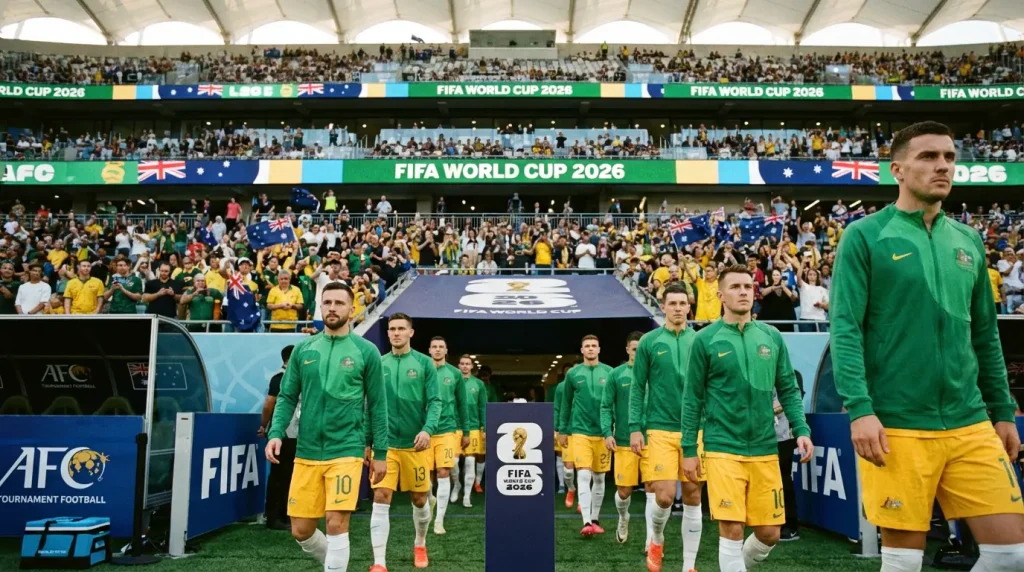
World Cup 2026 Betting Guide: Everything Aussie Punters Need to Know
 Available in US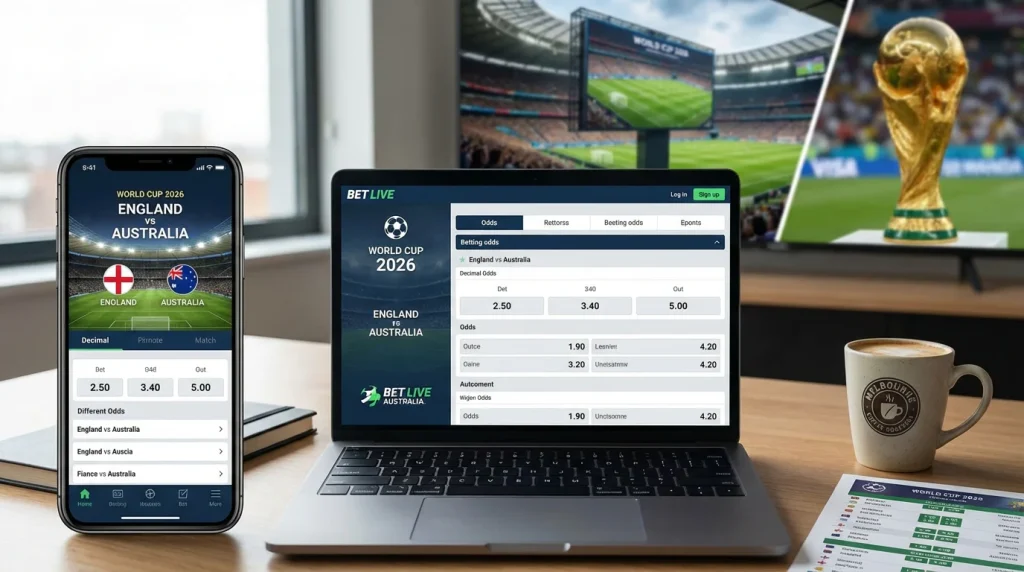
The last time FIFA expanded the World Cup, from 24 teams to 32 in 1998, the betting landscape shifted overnight. Markets that punters had relied on for decades — group winner odds, top scorer futures, even the basic structure of a knockout bracket — all had to be recalibrated. Now it’s happening again, and the scale is bigger than anything we’ve seen. Forty-eight teams, 12 groups, 104 matches across three countries, and a tournament window stretching 39 days from 11 June to 19 July 2026. For Australian punters, this isn’t just more football. It’s a fundamentally different betting event.
I’ve covered World Cup betting cycles since 2006, and I can tell you this: the 2026 format changes the calculus on almost every market you’ll encounter. Group dynamics shift when only one team from four goes home after the first round. The knockout bracket balloons to a Round of 32 before the traditional Round of 16 even begins. And for the first time, eight third-placed teams qualify for the knockouts — a mechanism that creates entirely new hedging strategies. This World Cup 2026 betting guide walks you through every angle an Aussie punter needs, from the structural changes that matter most to the specific rules governing how you can bet from Australia.
Whether you’re a seasoned punter who clears the diary every four years for the World Cup or someone punting on international football for the first time, the 2026 tournament demands homework. The old playbook won’t cut it.
Key Facts: The World Cup 2026 at a Glance
Before we get into the detail, here’s the structural picture every punter should have pinned to the wall. The 2026 FIFA World Cup runs from 11 June to 19 July across the United States (78 matches, including every knockout game from the quarter-finals onward), Mexico (13 matches, including the opening fixture at Estadio Azteca), and Canada (13 matches). There are 48 qualified teams sorted into 12 groups of four. The top two from each group advance automatically, and the eight best third-placed teams join them — giving us a Round of 32 instead of the traditional Round of 16 starting point. That’s 104 matches total, up from 64 at Qatar 2022. The final takes place at MetLife Stadium in East Rutherford, New Jersey, on 19 July at approximately 8:00 AM AEST.
For Aussie punters, the critical detail is timing. With matches played across North American time zones, kick-off times in AEST range from early morning to mid-afternoon. West coast venues (Vancouver, Seattle, San Francisco — where all three Socceroos group matches happen) produce the most AEST-friendly scheduling, with some kick-offs landing around midday. East coast venues push kick-offs into the small hours. Plan your punting sessions around the schedule, not against it.
The New 48-Team Format and What It Means for Betting
I remember sitting in a Melbourne pub after the 2022 final, arguing with a mate about whether expanding to 48 teams would water down the tournament. His view was simple: more teams, more dead rubbers, less drama. Three years later, having studied the qualification pathways, the group compositions, and the early odds markets, I think he’s dead wrong — at least from a betting perspective. More teams means more volatility, and volatility is where value lives.
The expansion from 32 to 48 teams doesn’t just add 16 nations to the mix. It rewires the entire competitive structure. Instead of eight groups of four where half the field goes home, we now have 12 groups of four where three-quarters of the field can advance. Read that again: in a group of four teams, only one is guaranteed elimination. That single change alters how teams approach matches, how managers rotate squads, and how bookmakers price group-stage outcomes. A team sitting on four points after two matches might still rest players in the third game knowing a third-place finish with a decent goal difference is enough. That kind of calculation didn’t exist at previous World Cups.
Group Stage — 12 Groups of Four
Each group contains four teams, and the format looks familiar on the surface: round-robin, three matches per team, standard points system. The difference is what happens after those three matches. The top two from each group qualify for the Round of 32, and then the eight best third-placed teams across all 12 groups also advance. That means 32 of 48 teams — two-thirds of the tournament — make the knockout stage.
For punters, this creates a specific dynamic in group winner markets. The gap between finishing first and finishing second narrows in practical terms because both positions guarantee advancement. But finishing first versus second matters enormously for the knockout draw — a group winner faces a third-placed team in the Round of 32, while a runner-up could face another runner-up or a strong third-placed qualifier. I’ve seen early odds markets underpricing second-place finishes in certain groups precisely because casual bettors focus on “who wins the group” without thinking about what second place actually means for the knockout path.
Third-place qualification adds another wrinkle. With 12 groups producing 12 third-placed teams and only eight advancing, the cut-off for a “best third-place” spot depends on results across the entire group stage. Historical data from UEFA European Championships — which have used a similar best-third-place system since 2016 — shows that four points virtually guarantees progression, and three points with a positive goal difference is usually enough. Punters should pay attention to this threshold when assessing group-stage multis involving underdogs.
Knockout Rounds — From 32 to the Final
The knockout bracket is where the 48-team format diverges most from what we’re used to. The Round of 32 is entirely new — 16 matches played over four days, producing 16 winners who then enter a traditional Round of 16. From there, it follows the familiar pattern: quarter-finals, semi-finals, a third-place playoff, and the final. In total, the knockout phase comprises 40 matches compared to 16 at the previous format.
From a betting standpoint, the Round of 32 is the most interesting innovation. Group winners are seeded against third-placed qualifiers, which means early knockout rounds should produce more lopsided matchups than we typically see. If you’re punting on match result markets or handicap lines in the Round of 32, expect bookmakers to price group winners as heavy favourites — and expect some of those favourites to stumble. At every Euros since 2016, at least one group winner has lost to a third-placed team in the first knockout round. Over 16 matches, the probability of upsets increases significantly, and that’s where shrewd punters can find overlays.
The additional knockout round also affects outright markets. Teams that finish first in their group play one extra match before reaching the quarter-finals, which means squad depth matters more than ever. A nation with 26 players of genuine quality has a measurable advantage over one relying on 15 starters and 11 passengers. Keep that in mind when assessing outright odds for teams with thin squads but talented first elevens.
World Cup Betting Markets: From Outrights to Match Specials
A World Cup with 104 matches generates a staggering number of betting markets. At the 2022 tournament, major Australian bookmakers offered more than 200 individual markets per match — from the straightforward head-to-head result to exotic player propositions. With 60% more matches in 2026, the total number of available bets across the tournament could exceed 20,000. Not every market is worth your time, and part of being a smart punter is knowing which ones give you an edge and which ones are designed to separate you from your money.
Outright Winner, Top Scorer, Group Winners
Outright markets are the backbone of World Cup betting, and they open months — sometimes years — before the tournament. The outright winner market is the most liquid, with every licensed Australian bookmaker offering odds on all 48 teams. As of early 2026, the market has Argentina, France, England, and Brazil clustered at the top between roughly 5.00 and 8.00 in decimal odds, with Spain and Germany close behind. Host nation USA typically sits around 12.00 to 15.00, benefiting from the home advantage bump that bookmakers always factor in for the host.
The outright odds across all 48 teams reveal a clear tiering. Tier one consists of the four or five genuine contenders priced under 10.00. Tier two includes the strong-but-not-favourites — Portugal, Netherlands, Belgium — sitting between 12.00 and 25.00. Tier three encompasses everyone else, and this is where value hunting gets interesting. A team like Morocco, who reached the 2022 semi-finals, might be priced at 35.00 or longer despite having proven knockout-stage credentials.
Group winner markets are a personal favourite of mine for the early tournament period. Each group produces one winner, and with 12 groups, you have 12 separate mini-markets to analyse. The key insight is that group winner odds often move significantly between the draw announcement and the first matchday based on squad announcements, injury news, and friendly results. Punters who lock in group winner bets early — before the market fully prices in form data — can capture meaningful value.
Top scorer (Golden Boot) markets are popular but notoriously difficult to predict. The historical trend at World Cups is that the top scorer usually comes from a team that reaches at least the semi-finals, simply because more matches mean more scoring opportunities. With the 2026 format adding a Round of 32, teams that go all the way could play up to eight matches — one more than the previous maximum of seven. This slightly favours prolific strikers from elite nations, though the expanded format also means more group-stage matches against weaker opposition, which could inflate tallies for players from any team in a soft group.
Head-to-Head, Over/Under, Both Teams to Score
Match-level markets are where most casual punters focus their energy during the tournament. The head-to-head (or 1X2) market offers three outcomes for group-stage matches — home win, draw, away win — and two outcomes (plus a draw for extra time, depending on the bookmaker’s rules) for knockout matches. In Australian betting, this is often listed as “match result” or simply “head-to-head” when the draw is excluded in knockout fixtures.
Over/under goals markets let you bet on whether the total goals in a match will be above or below a specified line — typically 2.5, though Australian bookmakers offer lines from 0.5 to 5.5 on most World Cup matches. At previous World Cups, the average goals per match has hovered between 2.5 and 2.7, which means the 2.5 line is almost a coin flip on aggregate. I find more value in the 1.5 and 3.5 lines, which tend to be mispriced for specific matchups. Group-stage matches between a heavy favourite and a debutant often go over 3.5 at generous odds because bookmakers anchor to tournament averages rather than the specific dynamics of a mismatch.
Both Teams to Score (BTTS) is a market that’s gained enormous popularity in Australia. It’s simple — you bet on whether both teams will find the net. At World Cups, BTTS has historically hit in roughly 50-55% of group-stage matches, making the “yes” option a marginal favourite at fair odds. But the percentage drops in knockout matches, where defensive setups and the fear of elimination tend to suppress goals from at least one side. Adjust your BTTS approach accordingly once the tournament enters the knockout phase.
Multis and Same-Match Multis
Australians love a multi — it’s practically a national pastime alongside meat pies and complaining about umpires. A multi (accumulator in UK parlance) combines multiple selections into a single bet, multiplying the odds together for a larger potential payout. At a World Cup with 104 matches, the temptation to string together five or six “certainties” into a multi is almost irresistible.
I won’t pretend I haven’t thrown a few ambitious multis into the ring myself during past tournaments. But the maths is unforgiving. A four-leg multi where each selection has a 70% chance of winning has a combined probability of just 24%. That means even with four strong picks, you lose three out of four times. The key to World Cup multis is discipline: keep legs to three or fewer, focus on correlated outcomes (matches on the same day, related group results), and treat multis as entertainment, not a bankroll-building strategy.
Same-game multis (SGMs) combine multiple markets from a single match — for example, France to win, over 2.5 goals, and Mbappé to score anytime. SGMs are popular because they let you build a narrative around a single fixture. The risk, of course, is that correlated legs don’t multiply risk the way independent legs do, and bookmakers adjust their SGM pricing to account for this correlation. You’ll almost always get worse combined odds on an SGM than if you could bet the legs independently. Use SGMs selectively, and only when you have a strong view on how a specific match will unfold.
Betting Rules for Australian Punters
A punter in Sydney and a punter in London might be watching the same match, but they’re operating under completely different regulatory frameworks. Australia’s online betting laws are among the most detailed in the world, and they’ve tightened significantly in the past two years. If you’re punting on the 2026 World Cup from Australia, understanding the legal landscape isn’t optional — it’s the foundation everything else sits on.
What’s Legal — IGA, ACMA and Your Rights
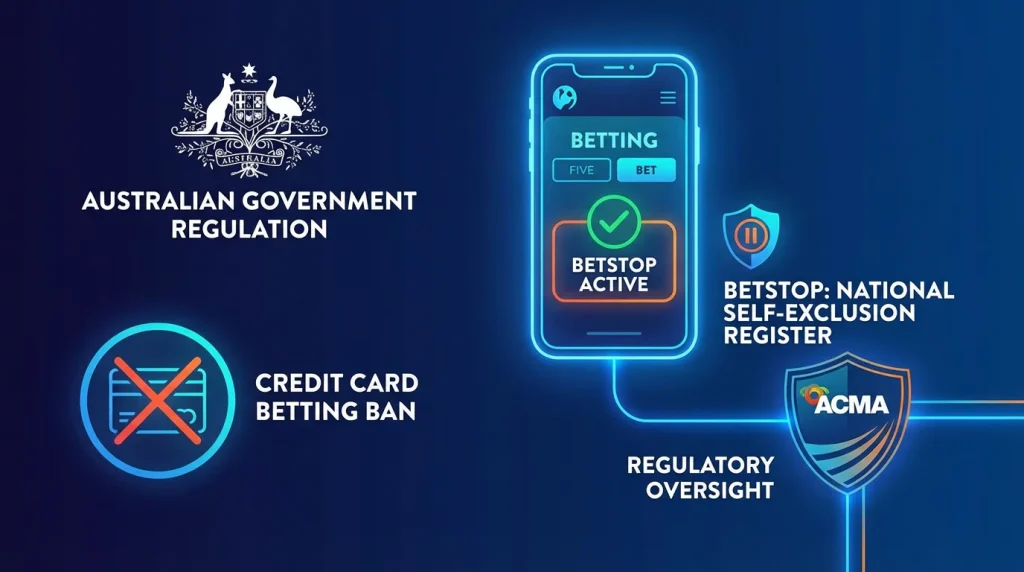
Online sports betting is legal in Australia under the Interactive Gambling Act 2001 (IGA), provided you use a licensed operator. The IGA prohibits online casinos and certain interactive gambling services, but explicitly permits wagering services — meaning you can legally place bets on the World Cup through any bookmaker licensed in an Australian state or territory. Licensing is handled at the state level (the Northern Territory Racing Commission is the most common licensing body for online operators), while the Australian Communications and Media Authority (ACMA) oversees compliance at the federal level and has the power to block unlicensed offshore operators.
Every licensed bookmaker in Australia is also regulated by AUSTRAC for anti-money laundering and counter-terrorism financing purposes, which means account verification (ID checks, proof of address) is mandatory before you can withdraw funds. The process is standard but can take 24-48 hours for new accounts — don’t leave it until the morning of the opening match.
Your rights as a punter include access to BetStop, the national self-exclusion register launched in 2023. If you register with BetStop, every licensed Australian bookmaker is legally required to close your accounts and refuse new ones. It’s a powerful tool, and I’d encourage anyone who feels their punting is getting out of hand to use it without hesitation. As of 2 April 2026, the Albanese government has also announced sweeping reforms to gambling advertising. From 2027, betting ads will be banned on sports venues and player uniforms, celebrity endorsements for betting products will be prohibited, and broadcast advertising during live sport between 6:00 AM and 8:30 PM will be severely restricted. While these reforms won’t affect the 2026 tournament directly, they signal the direction of Australian gambling regulation.
The Credit Card and Crypto Ban
Since June 2024, Australian punters cannot use credit cards to fund betting accounts. The ban applies to all licensed operators and was introduced to reduce gambling-related financial harm. Debit cards, bank transfers, and approved e-wallets remain available. Cryptocurrency deposits were banned at the same time — no Bitcoin, no Ethereum, no stablecoins. If your existing betting workflow relied on credit or crypto, you’ll need to adjust before the tournament starts.
The practical impact is straightforward: fund your betting account with money you actually have, not money you’re borrowing. For most punters, this means debit card or direct bank transfer. Processing times vary — bank transfers can take one to two business days, while debit card deposits are usually instant. Plan ahead if you want funds available for early group-stage matches on 11 June.
Reading Decimal Odds and Finding Value
I once watched a mate place a $50 bet on Brazil to beat Costa Rica at 1.20 during the 2018 World Cup, thinking it was “free money.” Brazil won 2-0, he collected $60, and he genuinely believed he’d made a brilliant play. He’d risked fifty dollars to make ten. That’s not punting — that’s lending money at a terrible interest rate. Understanding what decimal odds actually represent is the difference between informed betting and just handing your cash to a bookmaker with extra steps.
Decimal odds are the standard in Australia, and they express the total return on a winning bet per dollar staked, including your original stake. If the odds are 3.50, a $10 bet returns $35 — that’s $25 profit plus your $10 back. If the odds are 1.50, the same $10 bet returns $15 — just $5 profit. The formula is simple: payout = stake x odds.
But the real skill is converting decimal odds into implied probability and then comparing that to your own assessment of the actual probability. The conversion formula is: implied probability = 1 / decimal odds x 100. So odds of 4.00 imply a 25% chance. Odds of 2.00 imply a 50% chance. Odds of 1.50 imply a 66.7% chance. When you believe a team has a 30% chance of winning but the bookmaker has priced them at 4.50 (implying 22.2%), that’s a value bet — you’re getting better odds than the probability warrants.
Finding value at a World Cup is harder than in domestic leagues because there’s less form data and more public money flooding into popular teams. Argentina’s outright odds, for example, will be compressed by the sheer volume of sentimental bets from fans worldwide, which means their implied probability is inflated beyond what their actual chances justify. Conversely, teams like Morocco, Colombia, or even the Socceroos in specific match markets might be underpriced because they attract less public interest. Value lives in the gap between what the crowd believes and what the numbers say.
One practical approach I use for World Cup betting is maintaining a spreadsheet where I assign my own probability estimates to each group-stage match before checking the bookmakers’ odds. If my estimate and the market are within 2-3 percentage points, there’s no edge. If they diverge by 5% or more, that’s a potential bet. It takes discipline to walk past a match where you think you know the winner but the odds don’t offer value — but that discipline is what separates long-term winning punters from the rest.
The Socceroos Factor: Betting on Australia at the World Cup
Every Aussie punter faces the same dilemma at every World Cup: do you back the Socceroos with your heart or fade them with your head? Having been through five of these cycles now, I’ve learned that the answer is usually somewhere in the middle — and the 2026 draw has made that middle ground more interesting than usual.
Australia landed in Group D alongside the United States (hosts), Paraguay, and Turkey. On paper, this is a balanced group with no team ranked outside the top 50 and no team that should be considered unbeatable. The USA are favourites to top the group, buoyed by home advantage and a young squad that’s been building toward this tournament for years. But second place is genuinely open, and with eight third-placed teams also advancing, the Socceroos have a realistic pathway to the knockout rounds.
The first match against Turkey on 14 June at BC Place in Vancouver (2:00 PM AEST) is the swing point. Turkey qualified through the UEFA playoffs with tight wins over Romania and Kosovo — they’re battle-tested but not a side that should frighten the Socceroos. A win in the opener puts Australia in a commanding position, allowing them to approach the USA match on 19 June in Seattle (5:00 AM AEST) without desperation. Even a loss to the hosts wouldn’t be fatal if the Turkey result went well.
The final group match against Paraguay at Levi’s Stadium in San Francisco on 25 June (12:00 PM AEST) could easily become a qualification decider. Paraguay are tough, physical, and difficult to break down — classic CONMEBOL grit. But they lack the individual quality that could hurt Australia on the counter. I expect this match to be tight, low-scoring, and decided by a single moment of quality or a set piece.
From a betting perspective, the Socceroos’ outright odds to win the tournament will be long — likely between 100.00 and 150.00. That’s not a value bet by any calculation. But their odds to qualify from the group, to finish in the top two of Group D, or to beat Turkey in the opener are where genuine punting opportunities exist. Match-specific markets — Australia to win and under 2.5 goals against Turkey, for instance — let you express a nuanced view rather than just blindly backing green and gold.
Match Schedule and AEST Kick-Off Times: When to Watch, When to Punt
Here’s the uncomfortable truth about being an Australian football fan during a North American World Cup: some of the biggest matches will kick off while you’re asleep. The USA’s Eastern Time zone is 15 hours behind AEST during the tournament window, which means a 9:00 PM ET kick-off translates to noon the following day AEST, while a 2:00 PM ET start translates to 4:00 AM AEST. The time zone arithmetic will define how you experience — and punt on — this tournament.
The good news for Socceroos fans is that all three Group D matches are on the west coast. Vancouver, Seattle, and San Francisco operate on Pacific Time, which is three hours behind Eastern Time and therefore 17 hours behind AEST. That sounds worse, but the actual kick-off times land in AEST-friendly territory: the Turkey match kicks off at approximately 2:00 PM AEST on a Saturday, the Paraguay match at around 12:00 PM AEST on a Wednesday. The exception is the USA clash in Seattle, which has a 5:00 AM AEST kick-off on a Thursday morning — an alarm-clock special for the truly committed.
SBS holds exclusive free-to-air broadcast rights for all 104 matches in Australia. That means you don’t need a cable subscription or streaming package to watch every game, including the Socceroos fixtures. SBS On Demand will stream all matches, which is ideal for mobile viewing — handy if you’re checking odds on one screen and watching the action on another.
For punting purposes, the schedule creates a rhythm. Group-stage matches are spread across three daily windows in North American time, which means AEST punters will typically have morning matches (early group games from Mexican and Canadian venues), midday matches (afternoon kick-offs at US venues), and occasional late-night fixtures. My approach at past World Cups has been to identify two or three matches per day where I have a genuine edge and ignore the rest. With 104 matches over 39 days, there’s no need to bet on everything — and doing so is the fastest way to drain a bankroll.
One timing consideration that many Australian punters overlook: odds markets for the following day’s matches often settle in the early Australian evening (late US morning). If you want to secure the best pre-match odds before the market tightens with late team news and money, placing bets between 6:00 PM and 10:00 PM AEST the night before a match is often the sweet spot. This is especially relevant for the tournament’s early days when bookmaker models are still adjusting to actual World Cup form rather than pre-tournament estimates.
Betting on the 2026 World Cup — Your Questions Answered
48 Teams, One Tournament, and a Nation of Punters Ready
The 2026 World Cup is unlike any that’s come before. A 48-team field spread across three countries, a knockout bracket that starts with 32 teams instead of 16, and a tournament window long enough to test the patience and bankroll of even the most disciplined punter. For Australians, the combination of the Socceroos in a genuinely competitive group, AEST-friendly scheduling on the west coast, and free coverage on SBS makes this the most accessible offshore World Cup in memory.
But accessibility isn’t the same as profitability. The fundamentals haven’t changed: find value where the market misprices probability, manage your bankroll across 39 days of football rather than blowing it on the opening weekend, and remember that no bet is mandatory — the best punters are the ones who know when to sit a match out. Use this guide as your starting framework, build your own probability models, and enjoy what should be a spectacular six weeks of football.
The Socceroos play their first match on 14 June in Vancouver. That’s your date. That’s your starting whistle.