
USA at the World Cup 2026: Hosts, Socceroos’ Group D Rivals and Betting Outlook
 Available in US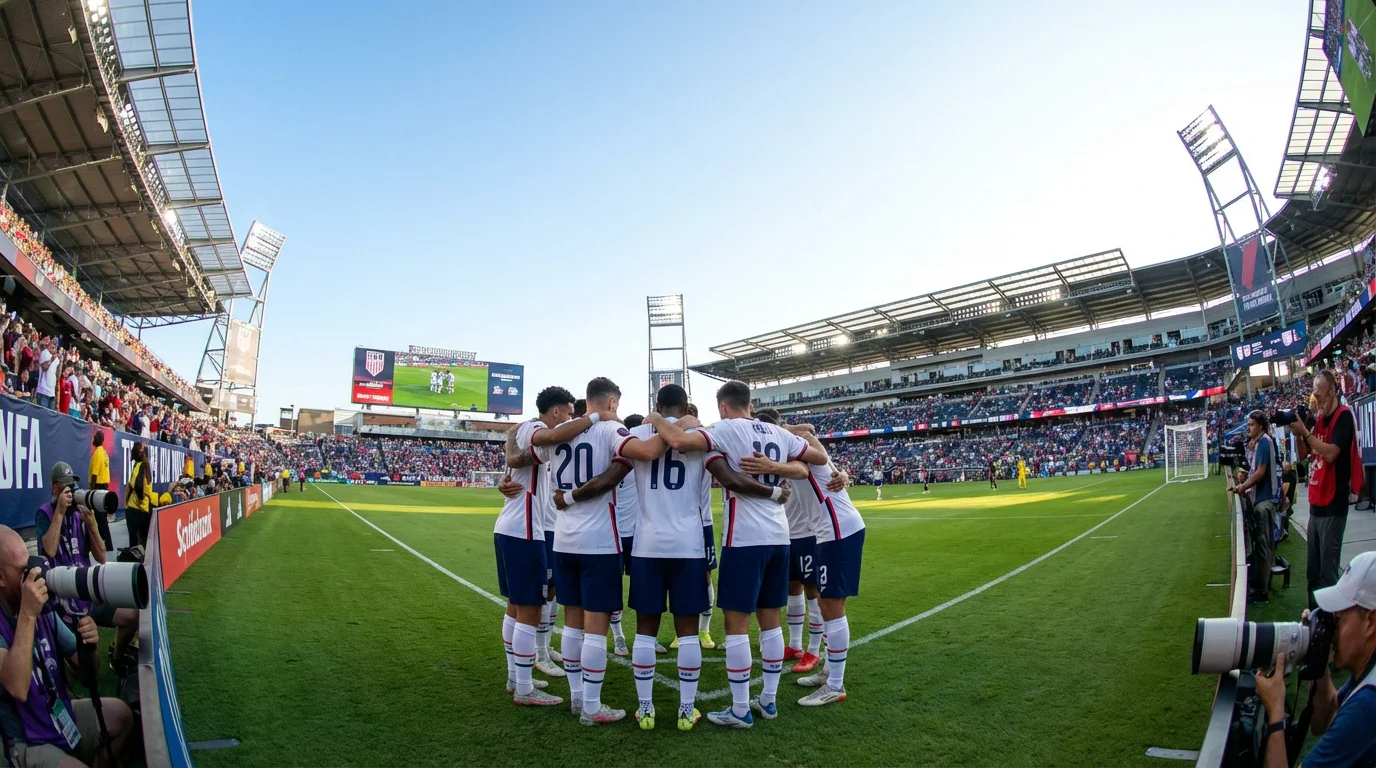
On 19 June 2026, the Socceroos walk into Lumen Field in Seattle to face the host nation in front of 70,000 Americans who have waited eight years for their team to play at a home World Cup. For Australian punters, this is not just another group match — it is the fixture that shapes every betting angle in Group D. Understanding the USA, their strengths, their vulnerabilities and the weight of hosting is essential before you place a dollar on anything related to the Socceroos’ campaign.
Home Advantage: What History Tells Us About Host Nations
Every World Cup host since 1998 has reached at least the quarter-finals. South Korea made the semi-finals in 2002. Germany reached the semis in 2006. Brazil made the last four in 2014. Russia went to the quarters in 2018. Qatar bowed out in the group stage in 2022 — the first host to do so, but Qatar were also the weakest host nation in World Cup history by a considerable margin.
The USA are not Qatar. They have a squad with genuine quality, a domestic league that has grown dramatically in the past decade, and a generation of players competing at the highest level of European club football. Home advantage adds a layer that the odds struggle to quantify precisely — familiar pitches, travel logistics that favour the home side, crowd energy that can swing tight matches, and the psychological lift of representing your country on your own soil.
The 1994 World Cup, the last time the USA hosted, saw the Americans reach the Round of 16 before losing to Brazil 1-0. That squad was built on athleticism and defensive organisation rather than technical excellence. The 2026 vintage is a fundamentally different proposition — more technically accomplished, more tactically aware, and better prepared for the demands of a tournament that has expanded from 32 to 48 teams. Bookmakers price the USA around 13.00-17.00 in the outright market, reflecting genuine contender status rather than sentimental home advantage.
For punters assessing Group D, the home advantage factor matters most in the USA’s home matches. Games at Lumen Field in Seattle and other American venues will feature overwhelming crowd support. The atmosphere at USA matches will be unlike anything the Socceroos have experienced outside an AFC final — louder, more partisan, and sustained for 90 minutes. That environment affects decisions on the pitch, influences referees at the margins, and creates a wall of noise that makes communication between defenders difficult.
USA’s Key Players: Pulisic, McKennie and the MLS Core
Christian Pulisic is the player every Australian defender will have studied on video before 19 June. His ability to receive the ball in tight spaces, turn past defenders and create scoring opportunities — either for himself or for teammates — makes him the most dangerous attacker in Group D. At AC Milan, Pulisic has added consistency to his natural talent, producing at a level that confirms his status as a world-class wide forward rather than a player who delivers only in flashes.
Weston McKennie provides the midfield energy that allows Pulisic to focus on attacking. His box-to-box running, ability to win aerial duels and experience at Juventus in Serie A give the USA a midfield presence that can compete physically and technically against any side at the tournament. McKennie’s intensity sets the tone for the team’s pressing — when he hunts the ball, the rest follow.
Tyler Adams, when fit, is the midfield anchor. His reading of the game, positional discipline and ability to intercept passes before they reach dangerous areas make him the defensive shield that frees the attackers to take risks. Injuries have disrupted his recent seasons, and his availability for the World Cup will significantly affect how the USA set up tactically. Without Adams, the midfield balance shifts, and the defensive vulnerability increases — a factor worth monitoring in the weeks before the tournament.
The forward line combines MLS experience with European pedigree. Strikers developed in Major League Soccer bring familiarity with the physical conditions — heat, humidity, artificial surfaces in some training facilities — while European-based forwards add the technical sharpness that comes from competing in top leagues weekly. The depth across the squad allows the coaching staff to rotate without a dramatic drop in quality, which matters in a format where three group matches plus potential knockout rounds demand careful management of minutes.
The defensive spine is the area of most uncertainty. Centre-back partnerships have been rotated frequently, and the goalkeeping position remains a subject of debate among American football analysts. For punters, this defensive uncertainty is relevant — the both teams to score market in USA matches could offer value if the defence has not settled by the tournament’s opening week.
Group D Opponents: The Socceroos Face-Off on 19 June in Seattle
The USA vs Australia match on 19 June is the second Group D fixture for both sides. By that point, the results of the opening round — USA vs Paraguay and Australia vs Turkey — will have reshaped the odds and established the group’s narrative. If the USA have beaten Paraguay comfortably and Australia have overcome Turkey, the Seattle match becomes a contest for top spot. If either side has dropped points in the opener, it becomes a must-win.
From a tactical perspective, the USA will approach the Socceroos differently than they would a European side. Australia’s defensive organisation and willingness to cede possession will frustrate an American squad accustomed to opponents who engage in open play. The Socceroos’ low block — compact, narrow, difficult to penetrate through the centre — will force the USA to attack through width, crossing into the box where Harry Souttar’s aerial dominance gives Australia an advantage.
The match kicks off at 3:00 PM local time in Seattle, which translates to 5:00 AM AEST on a Thursday morning. For Australian punters who want to watch live, it is an early alarm — but the match will be on SBS and available on demand for those who prefer to sleep and watch later. The 5:00 AM AEST start places this fixture in the overnight betting window, where line movements can be sharper and market liquidity lower. Placing your bets before midnight AEST on Wednesday evening ensures you lock in the pre-match odds before any late team news shifts the market.
The head-to-head market will likely price the USA around 1.50-1.65, the draw at 3.80-4.20, and Australia at 5.50-7.00. Those Socceroos odds reflect the home advantage and quality differential, but they also present a punting opportunity. A draw — which Australia would likely accept given the group dynamics — pays generously, and the Socceroos’ defensive structure makes a low-scoring stalemate a realistic outcome.
I see the under 2.5 goals market as the sharpest angle for this match. Australia’s record in qualifying against stronger opponents produced consistently low-scoring affairs. The USA’s attacking quality will create chances, but converting against an organised, deep-sitting defence with aerial strength requires patience that host-nation pressure may not allow. A 1-0 or 1-1 scoreline is the most probable outcome, and both fall under the 2.5 line.
USA Odds: Group D, Deep Run and Outright Markets
The USA are priced around 1.55 to win Group D — the clear favourites, but not overwhelmingly so. That price implies roughly a 65% probability, which accounts for the home advantage, squad quality and the relative strength of the other three teams. Turkey and Australia are both priced in the 4.50-6.50 range for the group winner, with Paraguay the longest odds at around 8.00-11.00.
In the outright market, the USA sit at 13.00-17.00 to win the World Cup. That is a significant gap behind Argentina, France and England, reflecting the honest assessment that while the USA can compete with anyone in a one-off match, sustaining that level across seven knockout rounds against progressively stronger opponents is a different challenge. Host nation status provides an edge in the group stage and early knockout matches, but by the quarter-finals and semi-finals, the advantage of playing at home diminishes against the tactical sophistication and individual brilliance of South American and European powerhouses.
For Aussie punters, the USA’s odds profile creates interesting secondary markets. The USA to reach the quarter-finals is priced around 1.60-1.80, which reflects a high probability that offers modest but reliable returns. The USA to reach the semi-finals jumps to 2.80-3.50, representing the market’s view that they will face a serious test in the last eight. If you believe the home advantage extends deeper into the tournament than the market expects, that semi-final price could represent genuine value.
What Aussie Punters Should Know About Backing (or Fading) the USA
Backing the USA at this World Cup is a bet on home advantage, squad improvement, and a favourable draw in the early knockout rounds. Fading them — backing their opponents — is a bet on the historical pattern that host nations outside traditional football powers rarely reach the final. Both positions have merit, and the right approach depends on the specific market.
In Group D, fading the USA in the Australia match offers the best risk-reward profile. The Socceroos’ defensive capability and tactical approach are specifically designed to neutralise sides with more attacking quality. A draw or narrow loss is the most likely outcome from Australia’s perspective, and the odds for both results are generous enough to justify a measured bet. Backing the USA to win Group D at 1.55 is not terrible value, but it ties up capital for three weeks with modest upside.
Beyond Group D, the USA’s knockout path is worth mapping. If they finish first in their group, they will face a third-placed team from one of the other groups in the Round of 32 — a match they should win comfortably. The Round of 16 becomes more challenging, and the quarter-final is where most models project the USA’s tournament to end. Backing the USA to exit in the quarter-finals at specific odds — if your bookmaker offers elimination round markets — could be a sharp contrarian play.
One factor unique to this tournament is the travel schedule. The USA’s group matches are on the west coast — Seattle and potentially other Pacific time zone venues. If they progress to knockout rounds in the east — Philadelphia, New York, Miami — the cross-country travel and time zone adjustment could affect performance. It is a small factor, but in a tournament decided by fine margins, it is worth noting.
The hosts set the stage in Group D, but the Socceroos write their own script. Understanding the USA — their tactical approach, their key players, their vulnerabilities under pressure — gives Australian punters the edge they need to navigate the most important group match of the Socceroos’ campaign. The 5 AM alarm on 19 June is not optional. Neither is the preparation.
