
Socceroos at the World Cup 2026: Odds, Squad, Group D Analysis and Betting Tips
 Available in US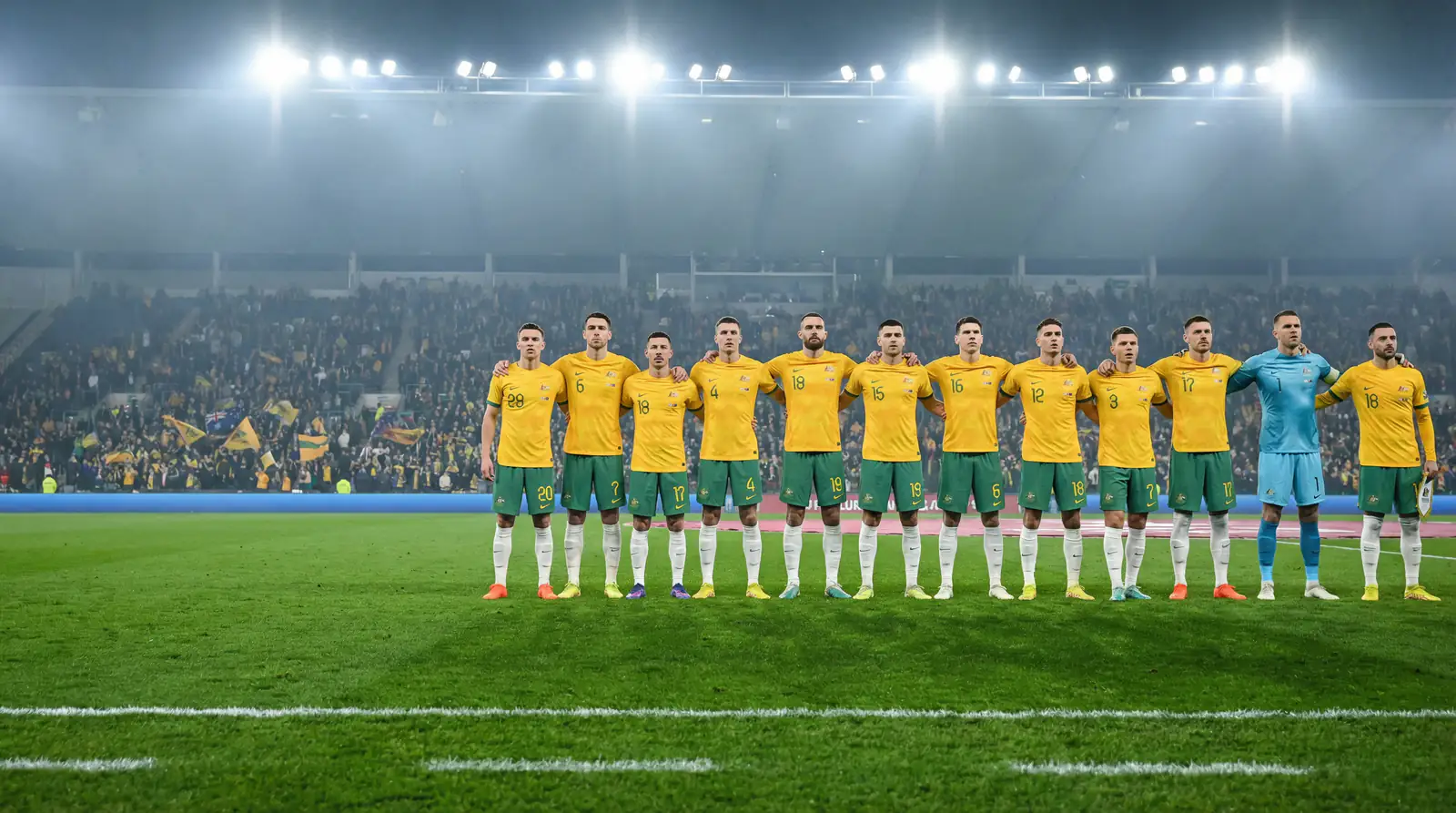
Every Socceroos match at the 2026 FIFA World Cup kicks off on the west coast of North America — Vancouver, Seattle, San Francisco. For punters in Sydney, Melbourne and Brisbane, that means afternoon and midday kick-off times in AEST, with only one early-morning alarm required across the entire group stage. I have covered five World Cup cycles from an Australian betting perspective, and I cannot remember a draw this kind to our body clocks. The fixtures land on SBS for free, the bookmakers have Group D markets open, and the Socceroos arrive in North America with a genuine path out of the group. Here is everything you need to know before you place a cent.
How the Socceroos Qualified: The Road to 2026
Australia’s qualifying campaigns rarely follow a script. The 2026 cycle was no different — a grind through the AFC’s expanded pathway that tested depth, composure and the nation’s willingness to set a 1 AM alarm for a Tuesday night match against Bangladesh.
The Socceroos progressed through the second round of Asian qualifying as group winners, posting five wins and a draw across six matches. That earned a place in the third round, where the real contest began. The final group included Japan, Saudi Arabia, Bahrain, China and Indonesia. Australia needed a top-two finish to qualify automatically, or third place to enter the inter-confederation play-off. A run of three wins in the final four matchdays sealed automatic qualification and made the play-off route unnecessary.
What stood out was resilience. Two goals conceded in injury time against Japan in Saitama could have derailed the campaign. Instead, the squad responded with back-to-back clean sheets against Saudi Arabia and Bahrain — results that steadied the ship and restored confidence in the defensive structure. That steel, built on an organised low block and rapid transitions through midfield, became the tactical signature of the qualifying run.
The numbers tell the story. The Socceroos conceded fewer goals in the third round than any side outside Japan. They kept clean sheets in four of their ten matches, and in the six matches where they did concede, four of those involved a single goal against. This is a side that does not get blown apart. For a World Cup group containing the USA, Turkey and Paraguay — teams that all prefer to play on the front foot — that defensive record matters enormously.
Several players cemented their international credentials during qualifying. The squad is no longer defined by one or two European-based stars dragging the rest along. It is a collective, drilled in patterns that work at this level. The road to 2026 was not glamorous, but it was effective — and effectiveness is what gets you out of a World Cup group.
Key Players: Who Carries the Green and Gold in 2026
I watched Australia’s 2006 squad through the lens of Tim Cahill and Harry Kewell — two names that carried expectation for an entire nation. Twenty years on, the burden is spread wider, which is both a strength and a source of punting uncertainty.
The goalkeeping position is settled. Mat Ryan, now with over 80 caps, brings major tournament experience from Qatar 2022 and every qualifying cycle since 2014. His distribution has improved with each passing year, and at his European club he faces high-volume shots weekly — ideal preparation for a group stage where Australia will not dominate possession against the USA or Turkey.
In central defence, Harry Souttar’s physical presence — 198 centimetres of aerial dominance — gives Australia a weapon at set pieces and a shield against direct attacking play. His partnership with Kye Rowles has matured through qualifying, and their combined reading of the game compensates for a lack of individual pace. If the Socceroos are to keep clean sheets at the World Cup, this pairing is the foundation.
The midfield engine room depends on Jackson Irvine’s workrate and positional intelligence. He covers ground that allows more creative players to take risks. Alongside him, the emergence of younger midfielders from the A-League and European second divisions has added depth that previous World Cup squads lacked. Connor Metcalfe’s pressing intensity and Aiden O’Neill’s passing range offer tactical flexibility.
Up front, the question is goals. Australia’s qualifying campaign produced enough to progress, but the conversion rate from open play needs to improve against higher-calibre defences. The forward line relies on movement and collective pressing rather than a single prolific striker. That makes the anytime goalscorer market interesting — no clear favourite means longer odds across the board, and a headed goal from a set piece involving Souttar is a genuine possibility in every match.
The squad depth is the best Australia has taken to a World Cup. The days of relying on fifteen players and hoping nobody gets injured are over. The bench offers genuine alternatives in every position, a direct result of more Australians playing competitive football in Europe and Asia. That depth matters across a group stage where three matches in eleven days test physical and mental reserves in ways that qualifying cannot replicate.
Group D Breakdown: USA, Paraguay, Turkey — and Where Australia Fits
Group D is the hosts’ group, and that shapes everything. The USA will play in front of sell-out crowds in Seattle and will carry the emotional momentum of a home tournament. But being a host nation at a World Cup is a double-edged sword — the pressure to perform in front of your own public has undone better squads than this American side.
The USA are clear favourites to top the group. Their squad blends Major League Soccer regulars with established stars at top European clubs. Christian Pulisic’s ability to unlock defences in tight spaces, Weston McKennie’s box-to-box energy, and a young defensive core that has been together through two qualifying cycles make them the strongest side on paper. Bookmakers price them around 1.55 to win Group D — short odds that reflect both quality and home advantage.
Turkey arrived through the UEFA play-offs, beating Romania and then Kosovo 1-0 in a tight, defensive affair. They are a side built on counter-attacking speed and midfield control through Hakan Calhanoglu. Arda Guler and Kenan Yildiz represent a new generation of Turkish talent, and their European club experience at the highest level means they will not be intimidated by the occasion. Turkey are dangerous opponents — but they also tend to be inconsistent across a group stage, which opens doors for Australia.
Paraguay bring CONMEBOL grit. They qualified through a South American qualifying campaign that rewards durability over flair, and their squad reflects that identity — compact, hard to break down, and capable of nicking a goal from set pieces or transitions. They are the least fancied side in Group D, but underestimating a South American qualifier at a World Cup is a mistake I have seen punters make repeatedly.
Australia’s path is clear. Beat Turkey in the opener, limit damage against the USA, and take care of business against Paraguay. Two wins and a narrow loss could be enough for second place. Even one win, one draw and one loss — with the right goal difference — could see the Socceroos progress as one of the eight best third-placed teams. The expanded 48-team format is generous to solid sides that avoid heavy defeats, and Australia’s defensive discipline makes a blowout loss unlikely against any of these three opponents.
Match 1 — Australia vs Turkey, 14 June, BC Place, Vancouver, 2:00 PM AEST
This is the match that defines the Socceroos’ tournament. A win here, and the pressure lifts entirely — Australia would need just a point from the remaining two fixtures to be in strong contention for qualification. A loss, and the campaign becomes an uphill battle with the USA and Paraguay still to play.
BC Place in Vancouver offers a neutral venue — neither side will have significant fan support compared to a USA home match. The retractable roof means weather is not a factor. The 2:00 PM AEST kick-off on a Saturday afternoon is prime viewing for Australian audiences, and I expect the betting volume on this match to be substantial. The head-to-head market will likely open with Australia as slight underdogs around 3.20-3.40, Turkey at 2.30-2.50, and the draw around 3.10. I see value on the Socceroos here — Turkey’s play-off route was gruelling, and early-tournament nerves affect sides that barely qualified.
Match 2 — USA vs Australia, 19 June, Lumen Field, Seattle, 5:00 AM AEST
The one alarm clock match. Lumen Field in Seattle is famously loud — the Sounders and Seahawks have made it one of North America’s most intimidating sporting venues. Australia will face a hostile crowd and a USA side expected to have won their opening match against Paraguay.
This is the fixture where damage limitation matters most. A draw would be an outstanding result. A narrow 1-0 loss, while not ideal, would not be fatal if Australia have already beaten Turkey. The over/under line at 2.5 goals is worth watching — I expect a tight, tactical affair with the USA controlling possession and Australia hitting on the counter. The under 2.5 at around 2.10-2.20 looks appealing based on how the Socceroos set up against superior opponents in qualifying.
Match 3 — Paraguay vs Australia, 25 June, Levi’s Stadium, San Francisco, 12:00 PM AEST
A Wednesday lunchtime kick-off in Australia — easy to follow live. By this point, the Group D permutations will be known. If Australia have beaten Turkey and kept the USA match tight, this becomes a contest for second place or a safe third-place finish.
Paraguay’s style suits a cagey, low-scoring match. Both sides will likely prioritise not losing over chasing a commanding win. If the Socceroos need a result, this is a match they can control through defensive discipline and set-piece threat. The draw at around 3.00-3.20 could represent solid value depending on the scenario.
Socceroos Betting Odds: Group Winner, Qualification, Outright
The first thing any punter should check before backing the Socceroos is which market offers the best risk-to-reward ratio. Outright winner odds for Australia sit around 151.00-201.00 across licensed Australian bookmakers — a novelty punt at best, reflecting the realistic assessment that winning seven consecutive knockout matches after the group stage is beyond this squad’s ceiling.
The value sits in shorter-term markets. Group D winner odds for Australia hover around 5.50-6.50, which implies roughly a 15-18% chance. That feels about right — the USA are strong favourites, but upsets happen. The more interesting market is Group D qualification (top two or best third), where Australia is priced at approximately 1.90-2.10. That is close to an even-money bet, and based on the group composition, I believe the true probability is higher than the implied odds suggest.
For punters who want to back the Socceroos without committing to a group winner bet, the “to qualify from group” market is the sharpest option. The eight best third-placed teams progress in the new 48-team format, and Group D is unlikely to produce a third-placed side with zero points. Australia’s defensive record in qualifying suggests they can avoid a blowout even in the USA match, keeping goal difference competitive.
Match-specific markets offer granular opportunities. Australia vs Turkey head-to-head, both teams to score, and correct score markets will all be available. I will cover specific match odds in detail closer to the tournament, but the early prices show Turkey and Australia priced closely — any movement toward longer Socceroos odds before 14 June could represent genuine value.
All odds are in decimal format, the Australian standard. A $50 bet at 2.10 returns $105 (including your stake). Compare prices across Sportsbet, Bet365, Ladbrokes and TAB — the differences on World Cup group markets can be significant, sometimes 0.15-0.20 in decimal terms, which adds up across a multi-match tournament.
Playing Style and Tactical Outlook Under the Current Setup
Forget the stereotype of Australian football as long balls and hard tackles. The current Socceroos play a structured 4-2-3-1 that transitions into a 4-4-2 defensive block when out of possession. The system is designed to absorb pressure, win the ball in midfield, and attack through quick vertical passes into the channels.
In qualifying, Australia averaged 47% possession across the third round — deliberately ceding the ball to Japan and Saudi Arabia and choosing to control space rather than territory. Against the USA, expect a similar approach. The Socceroos will sit in a mid-block, invite the Americans onto them, and look to exploit the space behind fullbacks who push high.
Set pieces are a genuine weapon. Souttar’s aerial presence means every corner and free kick carries threat. Australia scored four goals from set pieces during third-round qualifying — a rate that translates into real value in the anytime goalscorer and first goalscorer markets for defenders priced at long odds.
The pressing trigger is disciplined. Rather than pressing high across the pitch, the Socceroos engage in the middle third and force opponents wide, where turnovers are less dangerous. It is not glamorous football, but it is effective against sides with more individual quality. Turkey’s creative midfielders prefer central space — the Socceroos’ system is designed to deny exactly that.
One tactical concern is creativity in the final third. When the low block works and Australia win the ball, the transition needs to be sharper than it was in parts of qualifying. Against Paraguay, a team that will also sit deep, the Socceroos may need to take the initiative and control possession — a role reversal that has not always suited this group of players. The coaching staff have worked on building attacks through the fullbacks, who push higher when the team is chasing a goal, but this leaves space in behind that quicker opponents can exploit. Balancing defensive solidity with attacking intent will be the tactical tightrope of the entire group stage.
Australia’s World Cup History: From 1974 to 2026
Tim Cahill’s left-foot volley against Japan in Kaiserslautern, June 2006 — if you are over 30 and Australian, you remember exactly where you were. That goal did not just equalise a match. It announced that Australian football had arrived at the World Cup after a 32-year absence.
The Socceroos’ first World Cup appearance came in West Germany in 1974. The squad drew 0-0 with Chile and lost narrowly to both East Germany and West Germany. No goals scored, no wins, but a foundation laid. It took until 2006 for Australia to return, and when they did under Guus Hiddink’s coaching, the nation fell in love with the game. A group stage exit in 2006 was followed by consecutive appearances in 2010, 2014, 2018 and 2022 — each ending at the group stage, each producing moments of pride alongside the inevitable disappointment.
Qatar 2022 was the most recent chapter. Australia beat Tunisia 1-0, lost to France, and then produced one of the great Socceroos results — a 1-0 win over Denmark that secured a place in the Round of 16 for only the second time in history. The knockout stage brought Argentina, and while a 2-1 defeat ended the campaign, the manner of the performance — competitive, organised, unafraid — proved this squad could handle the occasion. Losing to the eventual champions is no disgrace. Competing with them for 90 minutes earned respect across the football world.
The pattern across six World Cup campaigns is clear: Australia compete, occasionally thrive, but have historically lacked the depth to sustain a deep run. The 2026 format changes the equation in the Socceroos’ favour. With 48 teams, the expanded knockout bracket includes a Round of 32 where the top two from each group and the eight best third-placed sides progress. For the first time, a single group-stage win could be enough to advance. That is significant for a nation whose World Cup history is defined by fine margins — a late goal here, a penalty there, a referee’s call that went the wrong way in a decisive moment.
From Tim Cahill’s volley in Kaiserslautern to a Saturday afternoon in Vancouver — the Socceroos’ World Cup story keeps adding chapters. Group D is balanced, the kick-off times are kind, and SBS has every match covered. Whether you are setting an alarm for the 5 AM clash against the USA or settling into the couch for a Saturday arvo opener against Turkey, the Socceroos’ World Cup 2026 odds offer genuine punting opportunities for those who understand what this squad can do. The green and gold have earned their place. Now it is time to deliver.
