
England at the World Cup 2026: Odds, Squad and Group L Analysis
 Available in US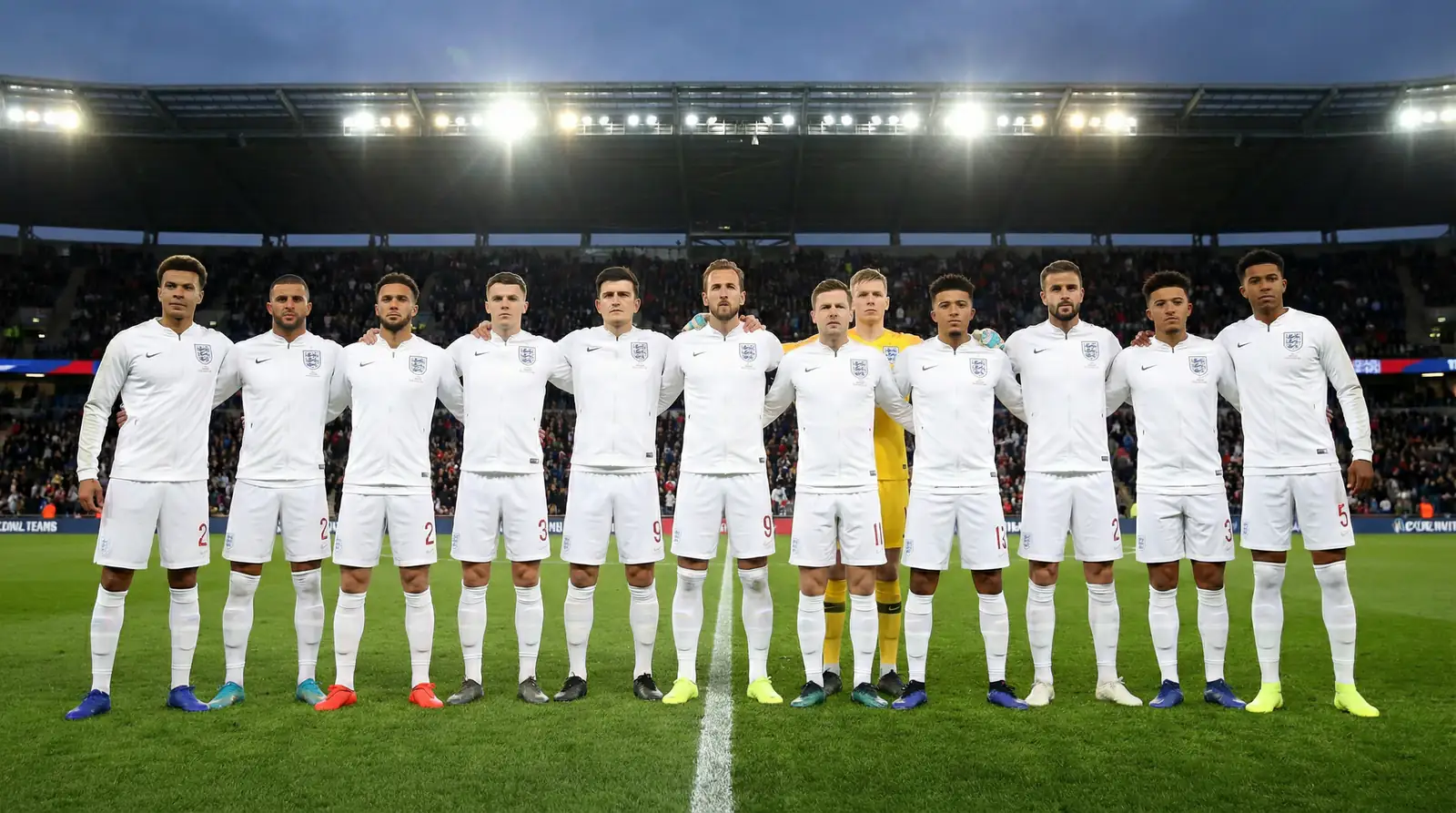
Sixty years of hurt and counting. England have not won a major tournament since 1966, and no amount of Premier League dominance or youth development revolution has changed that statistic. Yet the squad heading to North America in June 2026 is — on paper, in depth, in talent — among the best England have ever assembled. Two consecutive European Championship finals and a World Cup semi-final in 2018 suggest this generation knows how to get close. The question for Aussie punters is whether “close” finally becomes “across the line” at a price that offers genuine value.
England’s Road to 2026: UEFA Qualifying
There was a period in English football — not that long ago — when qualifying campaigns produced genuine anxiety. Iceland in 2016, Croatia in 2008, the failures that made the back pages and cost managers their jobs. Those days feel distant now. England qualified for the 2026 World Cup with a campaign that was efficient, controlled and largely untroubled.
The squad topped their UEFA qualifying group with a record that reflected both talent and professionalism. Home matches at Wembley were dispatched without fuss — England’s superiority in those fixtures was evident from the opening whistle, with most contests effectively decided by half-time. The away fixtures demanded more effort but produced the same outcome. A draw away to a physical Eastern European side was the only blemish in a campaign that otherwise ran to script.
What mattered more than the results was the evolution of style. Under the current management setup, England have moved away from the cautious, defence-first approach that characterised the 2018 World Cup run and parts of the Euro 2024 campaign. The qualifying cycle featured a higher defensive line, more aggressive pressing in the opponent’s half, and a willingness to commit players forward that earlier England managers would have considered reckless. The goal tally reflected this shift — England outscored every other European qualifier, averaging over three goals per match across the campaign. The attacking intent was deliberate, not accidental, and it signals how England plan to approach the World Cup group stage against sides ranked well below them.
For punters, the qualifying form is encouraging but requires context. England have a well-documented habit of looking imperious in qualifiers and then tightening up at the tournament itself, where the tactical freedom that produces four-goal wins against mid-tier European sides disappears against elite opposition that presses back with quality. The step up from qualifying to a World Cup knockout match is enormous, and the defensive vulnerabilities that England could mask in qualifying — particularly in transition, where their high line can be exposed by pace — will be ruthlessly targeted by Argentina, France or Brazil.
Squad Depth and Key Players: England’s Golden Generation 2.0
The phrase “Golden Generation” was used to describe the England squad of the early 2000s — Beckham, Gerrard, Lampard, Rooney, Owen — and it became a punchline when that group failed to deliver a major trophy. I use the phrase again deliberately, because this current squad has the depth to avoid the same fate.
Jude Bellingham is the centrepiece. At 22, he has already won La Liga and the Champions League with Real Madrid, scored decisive goals in European Championship knockout matches, and plays with a maturity that belies his age. His ability to arrive late in the box, score from midfield positions, and dictate the tempo of matches from a number eight role makes him England’s most important player — and one of the most important players at the entire tournament.
Phil Foden operates in the creative spaces that connect midfield to attack. His close control in tight areas, ability to score from distance, and willingness to take on defenders one-on-one give England a dimension that few other sides can match. The challenge has always been translating his Manchester City form to the international stage, where the system is less refined and the spaces less predictable. In recent tournaments, Foden has shown flashes rather than sustained excellence — a World Cup on the biggest stage could be the moment he puts together a complete performance across seven matches.
Bukayo Saka provides pace, directness and defensive commitment on the right flank. His development from a promising teenager at the 2022 World Cup to a mature, consistent performer has been one of English football’s most impressive arcs. Harry Kane — or his successor, depending on fitness and form — anchors the forward line with intelligent movement and a finishing record that speaks for itself. Declan Rice controls the midfield base with discipline and passing range.
The defensive options have improved dramatically. A generation of ball-playing centre-backs who have come through Premier League academies means England can play out from the back under pressure without resorting to long balls that surrender possession. The fullback positions offer attacking width from both sides, and the goalkeeping depth — multiple Premier League number ones competing for the shirt — ensures quality regardless of who starts.
Where this squad differs from previous “Golden Generations” is in the balance. There is no positional congestion — no two superstars competing for the same role and creating dressing-room tension. The pieces fit together. Bellingham and Foden complement rather than duplicate. Saka and the left-sided options provide balance. The defensive midfield is settled. That harmony, as much as individual talent, is what gives this squad its chance.
Group L: Croatia, Ghana, Panama — England’s Path
Group L has been called a potential group of death, and while that label is overused, the presence of Croatia makes this draw more interesting than most in the top half.
Croatia are a known quantity for England. The 2018 World Cup semi-final — a defeat that still stings — was defined by Luka Modric’s midfield dominance and Croatia’s refusal to be intimidated by the occasion. Modric will be 40 by the time the 2026 World Cup begins, and while his influence has waned, the tactical DNA he helped embed in Croatian football endures. The squad has regenerated around younger midfielders who play in top European leagues, and their 2022 World Cup third-place finish — earned through resilience and technical quality — confirms that Croatia remain a tournament team. The England vs Croatia match will attract heavy betting volume, and the head-to-head market should price this closer than the overall group winner odds suggest.
Ghana bring pace, athleticism and the unpredictability that African sides have historically injected into World Cup group stages. Their squad blends Premier League experience with raw talent developed in West African academies and European youth systems. The Ayew brothers — if still selected — provide experience, while a younger generation of players who have established themselves in the Bundesliga, Ligue 1 and the Championship add depth that previous Ghanaian squads lacked. The emotional energy of a Ghanaian World Cup campaign — fuelled by a passionate diaspora across Europe and North America — can lift performances beyond what the squad’s ranking suggests.
For punters, Ghana are the wildcard — capable of beating anyone on their day but equally capable of shipping three goals if their defensive organisation breaks down. The both teams to score market in the England vs Ghana match is worth monitoring. England’s attacking quality makes a clean sheet likely for the Three Lions, but Ghana’s pace on the counter means they will create chances that a less-organised defence would convert.
Panama qualified through CONCACAF and arrive as underdogs in every match. Their 2018 World Cup debut — a 6-1 loss to England — is the reference point, but this squad has evolved. Panama’s defensive structure is more organised, and the experience of competing against Mexico, the USA and Canada in CONCACAF qualifying has hardened them. They will not roll over, but their ceiling is limited by a talent gap that makes an upset against England or Croatia unlikely.
I expect England to finish first in Group L, with Croatia second. The Group L winner market prices England around 1.40-1.55 — shorter than some might expect, reflecting the Croatia factor. For punters who believe England will win all three group matches — which their qualifying form and squad depth support — that price offers marginal value. The risk is the Croatia match, where a draw or narrow defeat is a realistic outcome.
England Outright Odds and Each-Way Value
England are priced between 7.00 and 9.00 to win the 2026 World Cup across Australian bookmakers. That places them behind Argentina and France in most markets but ahead of Brazil, Spain and Germany. The implied probability at 8.00 is 12.5% — roughly a one-in-eight chance. Is that accurate?
The argument for England being undervalued rests on squad depth. No nation at the tournament has more players competing in the knockout stages of the Champions League. The Premier League produces a disproportionate share of the world’s elite footballers, and England benefit from the fact that their best players are tested weekly against top-level opposition in a league whose intensity mirrors World Cup football. That preparation advantage should not be underestimated.
The argument for England being fairly priced — or even overvalued — rests on tournament performance. Reaching finals and semi-finals is impressive, but England have not won a knockout penalty shootout at a World Cup since 2018 and have lost three of the last four major tournament finals or semi-finals they have contested. The pattern suggests a squad that performs well enough to reach the decisive stages but lacks the composure or tactical edge to win them. At 8.00, the market prices in the talent but also the history of falling short.
For Aussie punters, the each-way angle is strong. England reaching the semi-finals pays at around 2.50-3.00 in the top-four markets, and that is a bet with a high probability of success given the squad’s recent track record. If you believe England will be one of the last four teams standing — which they have managed in three of the last four major tournaments — the each-way outright offers value that the headline win price does not.
The match-by-match markets also favour England during the group stage. Under 2.5 goals in the Croatia match, England to win both halves against Panama, and Bellingham in the anytime goalscorer market across all three group fixtures — these are specific, data-driven bets that exploit England’s predictable style of play in matches they are expected to dominate.
Tactical Setup: What England Bring to 2026
England’s tactical evolution over the past decade is one of the most significant in international football. The side that scraped through qualifying under Sam Allardyce and limped to a Round of 16 exit in 2016 bears no resemblance to the squad that will take the pitch in June.
The current system is a fluid 4-3-3 that can shift to a 4-2-3-1 depending on the opposition. Bellingham operates as an advanced midfielder who drifts into the half-spaces between midfield and attack, creating overloads that opponents struggle to track. The wide forwards stay high and wide in possession, stretching defences horizontally and creating central space for Bellingham and Foden to exploit.
Out of possession, England press with intensity in the opponent’s half for the first 15-20 minutes of each half, then drop into a compact mid-block when the energy cannot be sustained. This phased pressing approach is more sophisticated than the all-or-nothing styles that some international teams employ, and it conserves energy across a tournament format that demands seven matches in 25 days.
Set pieces remain a weapon. England invested in set-piece coaching before the 2018 World Cup and have maintained that focus across subsequent tournaments, hiring dedicated analysts and rehearsing specific routines for every dead-ball situation. Corners, free kicks and throw-ins are all patterned plays with designated runners, blockers and decoy movements designed to create space for the most dangerous aerial threats. Three of England’s 2022 World Cup goals came from set pieces, and the aerial presence in the current squad — particularly from centre-backs and Bellingham’s late runs into the box — means every dead ball situation carries genuine threat. In a tight knockout match where open-play chances are limited, that set-piece capability could be the difference between a semi-final exit and a place in the final.
England at the World Cup: 1966, Heartbreak and Renewal
Bobby Moore lifting the Jules Rimet trophy at Wembley in 1966 is an image that has been replayed so often it has become more myth than memory. For the majority of Australian punters — and, indeed, for the majority of English fans — 1966 is ancient history. What matters is the pattern since: consistent underperformance at major tournaments, punctuated by occasional moments of hope that ultimately ended in disappointment.
The 1990 semi-final loss to West Germany on penalties. The 1996 European Championship semi-final loss to Germany on penalties. The 2018 World Cup semi-final loss to Croatia. The 2020 Euro final loss to Italy on penalties. The 2024 Euro final loss to Spain. The thread connecting these moments is not a lack of talent — it is a psychological fragility in decisive matches that has become part of England’s football identity. Whether this current squad has exorcised that demon remains the central question for anyone considering backing them at a World Cup.
The encouraging sign is that the pattern is shifting. England have progressed further in recent tournaments than at any point since the 1960s. The 2018 semi-final, two consecutive Euro finals, and consistently competitive knockout performances show a squad that no longer freezes on the big stage. These are young players whose reference points are Champions League finals and Premier League title races, not Wembley heartbreak from before they were born. They have experienced enough near-misses to understand what the final step requires. If any England squad has the mental makeup to break the cycle, it is this one — but that does not guarantee they will, and punters should price accordingly.
Punting England from Down Under: Ashes Rivalry Aside, Are They Value?
The Ashes rivalry gives Australian punters a complicated relationship with England. Backing the Poms to win anything feels slightly wrong — I have heard this sentiment from enough readers over the years to know it is genuine. But sentiment has no place in a betting portfolio, and England’s World Cup 2026 odds deserve objective analysis regardless of what happens at the MCG.
At 7.00-9.00, England represent the best value among the top-tier favourites in the outright market. Argentina and France are priced shorter despite facing similar structural challenges — the expanded format, the additional knockout round, the physical demands of a North American summer tournament. England’s squad depth rivals both nations, and their Premier League conditioning arguably gives them an edge in handling the intensity of matches played in June and July heat.
The risk factor is the Croatia group match, which could disrupt momentum and confidence if it goes poorly. A loss to Croatia — entirely possible given the historical pattern — would not eliminate England but could affect their seeding path through the knockout rounds, potentially creating a harder draw than necessary. For punters who want exposure to England without full outright risk, the top-four market at 2.50-3.00 is the sharpest angle.
My reading of the market is that England are slightly undervalued at the longer end of their outright range (9.00) and fairly priced at the shorter end (7.00). If you can find 9.00 on England, that is worth a measured outright bet alongside an each-way component. At 7.00, the value shifts to specific tournament markets — top scorer within the England squad, total group stage goals, and the match-by-match propositions where their attacking quality against Panama and Ghana produces predictable scorelines.
Football might not come home — history says it probably will not. But this England squad is closer than any since 1966, and the World Cup 2026 odds reflect a market that respects the talent while pricing in the history of falling short. For Aussie punters willing to look past the Ashes banter, England’s outright price offers value that the more fashionable picks at shorter odds do not. The squad is ready. The question is whether the moment will be.
