
All 48 World Cup 2026 Teams: Profiles, Odds and What Aussie Punters Should Watch
 Available in US
Forty-eight teams. Six confederations. Four World Cup debutants. A tournament so large that it required three host nations just to stage it. The 2026 FIFA World Cup field is the biggest in history, and for Aussie punters trying to make sense of it all, the sheer volume of teams to assess can feel overwhelming. I’ve spent the past six months breaking down every qualified nation’s path to this tournament, their current form, their squad depth, and where their odds sit across Australian bookmakers. This is the result — a complete rundown of all 48 World Cup 2026 teams, starting with the one that matters most to us.
The expansion from 32 to 48 teams has changed the competitive landscape in ways that go beyond adding 16 nations. Confederations that previously sent three or four representatives now send six or eight. Africa has nine teams at a World Cup for the first time. Asia has eight, including the Socceroos. CONCACAF, buoyed by three automatic host spots, has six. The result is a tournament that’s genuinely global in a way previous editions haven’t been — and for punters, that means more unfamiliar matchups, more uncertain outcomes, and more value hiding in markets that the general public hasn’t properly assessed.
48 Nations, Six Confederations: How the Field Breaks Down
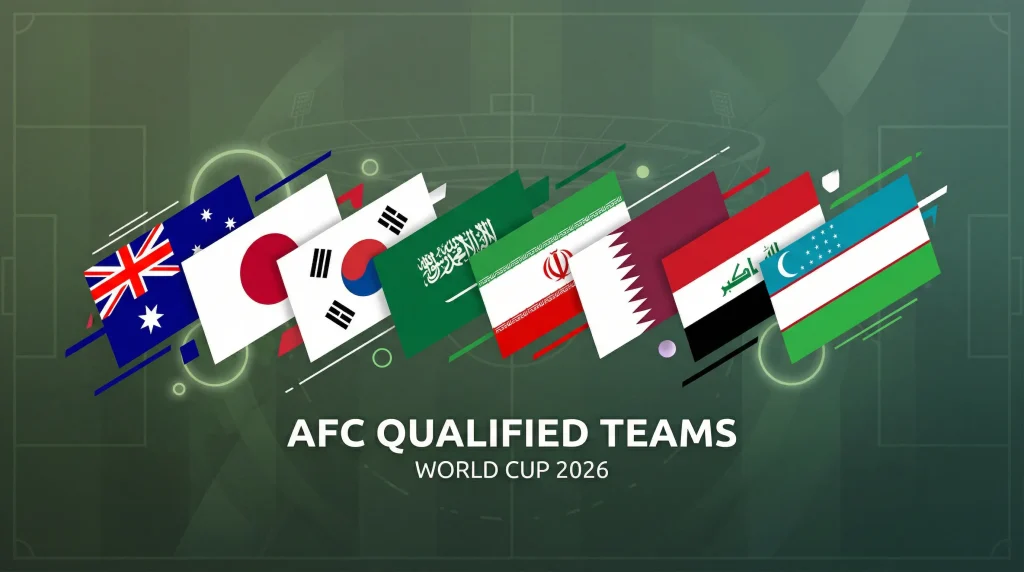
The World Cup 2026 field is drawn from all six FIFA confederations. UEFA leads with 16 European nations, reflecting its depth and the size of its qualifying competition. CONMEBOL sends six South American teams from its brutal ten-team round-robin qualifying process. CAF contributes nine African nations — a record. AFC has eight Asian representatives, including Australia. CONCACAF has six teams from North and Central America and the Caribbean. OFC’s sole representative is New Zealand. The four debutants — Cabo Verde, Curaçao, Jordan, and Uzbekistan — arrive from three different confederations, each with a story worth knowing.
For the analysis that follows, I’ve structured things in order of relevance to Australian punters: the Socceroos first, then the top contenders every punter will encounter in outright markets, the dark horses where value tends to hide, the three host nations, the Asian contingent we know from qualifying, and finally the debutants making history. Every section includes current odds ranges and my assessment of where the betting value sits.
Socceroos: Australia’s Road to 2026 and Group D Outlook
There’s a particular feeling you get watching the Socceroos in a World Cup qualifier at 3:00 AM on a work night, pacing around your lounge room while the ref adds four minutes of injury time and Australia clings to a one-goal lead against Bahrain or Kuwait. If you know that feeling, you understand why this team generates an emotional investment that no odds calculation can fully capture. The Socceroos have qualified for the 2026 World Cup, and they’ve been drawn into Group D alongside the United States, Paraguay, and Turkey.
Australia’s qualifying campaign through the AFC followed the familiar pattern — dominant against lower-ranked opponents, tested in the decisive fixtures against Japan and Saudi Arabia. The current squad blends A-League regulars with players at European clubs across the Championship, Eredivisie, and Scottish Premiership. It’s not a squad packed with household names on the global stage, but it’s a group that knows how to compete as a unit, which at a World Cup often matters more than individual brilliance.
Group D is the most analysed group from an Australian perspective, and the consensus view is broadly correct: the USA are favourites to top it, while Australia, Turkey, and Paraguay compete for second place and potentially a best third-place spot. The Socceroos’ detailed profile covers squad analysis, match-by-match previews, and specific betting markets in depth. Here, I’ll note the strategic picture: all three of Australia’s group matches are on the US west coast (Vancouver, Seattle, San Francisco), which provides the most AEST-friendly kick-off times and the most manageable travel schedule for the squad. That logistical advantage is underpriced by the market.
The opening match against Turkey on 14 June at BC Place in Vancouver (2:00 PM AEST) is the one that defines the campaign. Turkey qualified through the UEFA playoffs — they’re a quality side with genuine technical ability in midfield through players like Hakan Calhanoglu and emerging talent Arda Güler, but they’re not a team that should intimidate the Socceroos. A win in the opener creates breathing room. A loss makes everything that follows an uphill battle. If you’re backing Australia in any group-stage market, the Turkey match is where your money should focus first.
The USA clash on 19 June in Seattle (5:00 AM AEST) will be the toughest fixture on paper, with the hosts carrying crowd support and a squad built specifically for this tournament. But even a defeat there isn’t terminal if the Turkey result went well. The final match against Paraguay on 25 June at Levi’s Stadium (12:00 PM AEST) could be a dead rubber or a do-or-die qualification decider, depending on earlier results. The beauty and terror of a World Cup group stage is that every scenario is on the table until the final whistle of matchday three.
The Favourites: Who the Odds Say Will Lift the Trophy
Eight teams have won the FIFA World Cup across its 22 previous editions, and five of them — Brazil, Germany, Argentina, France, and England — are among the top six in most Australian bookmakers’ outright markets for 2026. The other three historical winners (Italy, Spain, Uruguay) have varying prospects. Italy didn’t even qualify — eliminated by Bosnia and Herzegovina in a penalty shootout during the UEFA playoffs in one of the most stunning results in recent World Cup qualifying history. Spain and Uruguay are both in the field but priced as second-tier contenders rather than outright favourites.
Argentina, Brazil and South American Pedigree
Argentina enter the 2026 World Cup as defending champions and the bookmakers’ outright favourite or co-favourite alongside France, typically priced between 5.00 and 6.50. The question that dominates every conversation about this team is Lionel Messi. At 38, he would be the oldest outfield player to feature at a World Cup in decades if selected. Whether he’s in the squad as a starter, a bench option for specific moments, or not at all will move the outright market by a full point or more. Regardless of Messi’s involvement, Argentina’s squad depth is extraordinary — Julián Álvarez, Enzo Fernández, Alejandro Garnacho, and a defence anchored by Cristián Romero would contend in any era.
Lionel Scaloni’s tactical system doesn’t depend on one player, which is why Argentina remain favourites even in scenarios where Messi doesn’t feature. Their CONMEBOL qualifying campaign was solid without being dominant, and they carry the confidence of having won both the 2022 World Cup and the 2024 Copa América. In Group J alongside Algeria, Austria, and Jordan (a debutant), Argentina’s path to the knockout rounds is as comfortable as any top seed could hope for.
Brazil, on the other hand, arrive at 2026 carrying 24 years of frustration. The last time the Seleção lifted the World Cup was in 2002, and the intervening tournaments have produced the 7-1 semi-final humiliation against Germany in 2014, an underwhelming group-stage exit against Belgium in 2018, and a quarter-final penalty shootout loss to Croatia in 2022. The talent is undeniable — Vinícius Júnior, Rodrygo, Endrick — but converting talent into tournament success has been Brazil’s persistent failure. Their odds typically sit between 7.00 and 9.00, making them the market’s third or fourth choice. Group C pairs them with Morocco, Haiti, and Scotland — a group they should win comfortably, but one where Morocco represents a genuine threat based on their extraordinary 2022 run.
For Aussie punters, the South American dynamic is worth understanding. Argentina’s pedigree as defending champions inflates their odds with public money, meaning their price often represents worse value than their actual probability would suggest. Brazil’s odds, compressed by the Seleção’s global fan base, suffer from the same phenomenon to a lesser degree. The shrewd play with South American contenders is usually not outright winner bets but tournament-stage markets — to reach the final, to win their group, to top their knockout-bracket half.
France, England, Spain, Germany and the European Challenge
France have been the most consistent World Cup performers of the last decade. Winners in 2018, runners-up in 2022 (losing the final to Argentina on penalties after one of the greatest matches ever played), Les Bleus arrive at 2026 with Kylian Mbappé at his physical and technical peak at age 27. France’s squad depth is absurd — they could field two separate XIs that would both be competitive at a World Cup. Under Didier Deschamps, their approach is pragmatic rather than beautiful, which tends to produce tournament results even when the football isn’t flowing. Priced between 5.50 and 7.00, France are the bookmakers’ co-favourite for a reason.
England’s odds have shortened with each successive tournament as the “Golden Generation 2.0” has matured. Euro 2024 finalists (losing to Spain in the Berlin final), England have the Premier League’s depth of talent and a squad that combines experience (Kane, Rice, Saka) with emerging quality. Their challenge has always been tournament mentality — converting domestic league excellence into knockout-round composure. Group L pairs them with Croatia (a fixture with real historical tension after the 2018 semi-final), Ghana, and Panama. England’s outright odds typically sit between 7.00 and 9.00.
Spain, the 2010 champions and 2024 European champions, are an interesting proposition. Their youth movement — Lamine Yamal, Gavi, Pedri — is perhaps the most exciting young core at the tournament. But Group H includes Uruguay, Saudi Arabia, and Cabo Verde, which is less straightforward than it first appears given Uruguay’s pedigree. Spain’s odds range from 8.00 to 11.00, and I see them as genuine value at the longer end of that range given their recent European Championship victory.
Germany, hosting the Euros in 2024 and reaching the quarter-finals on home soil, are a team in transition. The post-Neuer, post-Muller era is underway, and while the Bundesliga continues to produce talented players, Germany’s World Cup record since 2014 (a group-stage exit in 2018 and 2022) gives pause. Group E alongside Côte d’Ivoire, Ecuador, and Curaçao should be navigable, but Germany at 12.00-15.00 feel like a team you want in your knockout-stage accumulators rather than outright winner bets.
Dark Horses Worth a Punt
The phrase “dark horse” gets thrown around so loosely at every World Cup that it’s practically lost its meaning. When pundits call Portugal a dark horse, they’re not describing a longshot — they’re describing one of the most talented squads in the tournament priced at 10.00. A genuine dark horse, to me, is a team priced at 25.00 or longer that has a credible path to the quarter-finals or beyond. At the 2026 World Cup, three teams fit that profile.
Morocco are the standout. Their 2022 World Cup semi-final run wasn’t a fluke — it was built on an elite defence, a coach (Walid Regragui) who understands tournament football, and a squad where nearly every player is at a top European club. They’re in Group C with Brazil, Haiti, and Scotland, and while Brazil are the favourites, Morocco have every reason to believe they can finish top of that group. At odds between 30.00 and 45.00 to win the tournament outright, Morocco represent the kind of value that makes patient punters sit up. A more realistic bet is Morocco to reach the quarter-finals, which often pays between 4.00 and 6.00.
Colombia, drawn into the demanding Group K with Portugal, DR Congo, and Uzbekistan, are a team that tends to perform above their ranking at World Cups. Their qualifying campaign through CONMEBOL was strong, and a squad built around Premier League and Serie A players gives them the physicality and tactical discipline to compete in knockout football. Priced around 35.00 to 50.00 outright, Colombia are worth consideration in deep-run markets.
Japan round out my dark horse trio. Consistently excellent in Asian qualifying, the Samurai Blue have a squad dominated by players at top European clubs — Bundesliga, Premier League, La Liga — and a tactical identity that has evolved from disciplined defence to a genuine attacking threat. Group F with the Netherlands, Sweden, and Tunisia is tough but not impossible, and Japan’s performances at recent World Cups (pushing Belgium, Germany, and Spain in various editions) suggest a team capable of a genuine knockout run. Their odds sit between 40.00 and 60.00, and the value for Aussie punters who understand Asian football better than European-focused bookmakers is real.
The Three Hosts: USA, Mexico and Canada
The first multi-nation World Cup since Japan and South Korea in 2002 gives three North American countries automatic qualification and home advantage — though that advantage varies dramatically depending on which host you’re assessing. The United States host 78 of the 104 matches, including every game from the quarter-finals onward. Mexico get 13 matches including the tournament opener. Canada get 13 matches in Vancouver and Toronto. In betting terms, this means the USA’s home advantage is the most significant, while Mexico and Canada receive a diluted version that still matters for their group-stage fixtures played on home soil.
The USA are the most intriguing host from a punting perspective. A young squad led by Christian Pulisic, Weston McKennie, and a core of players who’ve been groomed for this tournament since their teens, the Americans are priced between 12.00 and 15.00. Historical data shows that World Cup host nations reach the semi-finals roughly 40% of the time — a percentage that would make the USA’s current odds look like value if the pattern holds. Group D places them alongside Australia, Paraguay, and Turkey, and anything less than topping that group would be a disappointment for a team playing at home.
Mexico are in Group A with South Korea, South Africa, and Czechia, and they open the tournament at Estadio Azteca in Mexico City — a venue that has hosted two previous World Cup finals. Mexico’s World Cup record is defined by the “quinto partido” curse — they’ve been eliminated in the Round of 16 at every tournament since 1994. The expanded format changes that dynamic somewhat (the first knockout round is now the Round of 32), but Mexican fans will be watching to see if this generation can finally break through to the quarter-finals. Odds around 40.00 to 60.00 reflect the market’s view that Mexico are a competitive group-stage team but not a serious contender.
Canada’s inclusion is the most remarkable story of the three hosts. A nation that qualified for only one previous World Cup (1986) is now guaranteed a place at the tournament, and their squad — led by Alphonso Davies and Jonathan David — is the best Canada has ever produced. Group B with Switzerland, Qatar, and Bosnia and Herzegovina is navigable, and Canada reaching the knockout rounds would not be an upset. Their odds to win the tournament are long (80.00+), but group winner and qualification markets offer interesting angles for punters who believe in the home support factor at BC Place in Vancouver and BMO Field in Toronto.
Asia and the Pacific: Socceroos’ Neighbours at the World Cup
AFC qualifying is a grind that only fellow participants truly appreciate. The Socceroos know this better than anyone — months of travel across time zones, matches in Jeddah heat and Tehran altitude, the relentless jockeying for position in a confederation that sends eight teams to the 2026 World Cup. For Aussie punters, understanding the Asian contingent isn’t just regional loyalty; it’s a genuine informational edge. European-focused bookmakers often misprice Asian teams because they rely on FIFA rankings and surface-level analysis rather than the deep form knowledge that comes from watching AFC qualifying rounds.
Japan are the cream of the Asian crop, as discussed in the dark horses section. South Korea, led by Son Heung-min in what may be his final World Cup, are in Group A with Mexico, South Africa, and Czechia — a group where anything from first to fourth is plausible. Saudi Arabia find themselves in Group H with Spain, Cabo Verde, and Uruguay, which is a brutal draw but one where the Saudis’ famous 2022 upset of Argentina reminds us never to write them off. Iran are in Group G with Belgium, Egypt, and New Zealand, and their tight defensive style makes them difficult opponents for any team.
Qatar, the 2022 hosts, are in Group B with Canada, Switzerland, and Bosnia and Herzegovina. Their home World Cup produced three losses from three group matches, and the squad has had limited competitive exposure since. They’re priced as outsiders in a group where Switzerland are favourites and Canada have home support. Iraq qualified through the intercontinental playoffs after beating Bolivia, and they join Group I with France, Senegal, and Norway — a group where survival rather than advancement is the realistic goal. Uzbekistan, one of the tournament’s debutants, are in Group K alongside Portugal, DR Congo, and Colombia, and their presence at a World Cup for the first time is a reward for years of steady development in Central Asian football.
For Aussie punters, the Asian teams offer specific value in match-level markets. Japan’s odds in Group F head-to-head markets against the Netherlands are often longer than they should be. South Korea’s ability to grind results against technically superior European opposition is consistently underpriced. And if you’ve watched the Socceroos struggle against Iran’s low-block defence in qualifying, you’ll understand why Iran at 4.50 to draw against Belgium in a group match isn’t as generous as it looks.
World Cup Debutants: Cabo Verde, Curaçao, Jordan and Uzbekistan
Four nations will walk onto a World Cup pitch for the very first time in 2026, and each of them has earned it through a qualifying journey that deserves recognition. Debutants at a World Cup tend to generate one of two reactions from punters: either they’re ignored entirely (priced as afterthoughts with odds of 500.00 or longer), or they attract sentimental money that pushes their match odds shorter than warranted. Neither approach is correct. The right response is to assess each debutant on merit and look for the specific markets where their novelty creates pricing inefficiencies.
Cabo Verde, the tiny Atlantic island nation with a population of about 600,000, qualified through CAF qualifying and will compete in Group H alongside Spain, Saudi Arabia, and Uruguay. On paper, it’s a daunting draw — but Cabo Verde’s squad includes players from Portuguese, Belgian, and French club football, and they play with an organisation and tactical discipline that belies their ranking. They won’t win the group, but a credible showing and perhaps a point from one of their matches is not unrealistic. Match result markets — particularly the draw option — are where Cabo Verde could offer value.
Curaçao, the Caribbean island with a population under 200,000, are in Group E with Germany, Côte d’Ivoire, and Ecuador. Their qualification route came through CONCACAF, and their squad benefits from dual nationality rules that have attracted Dutch-born players of Curaçaoan descent. The quality gap in Group E is significant, but Curaçao at a World Cup is already a fairy tale, and fairy tales occasionally produce a memorable chapter.
Jordan’s debut is a milestone for West Asian football. Drawn into Group J with Argentina, Algeria, and Austria after reaching the 2024 Asian Cup final, Jordan are no longer a curiosity — they’re a team with genuine competitive credentials in their region. The Argentina match will be a spectacle regardless of the result, but Jordan’s realistic target is competing with Austria for the third-place spot that could still mean advancement under the new format. Their odds to qualify from the group are long but not absurd, and a punter who believes in momentum from their recent Asian Cup run could find value there.
Uzbekistan, Central Asia’s first World Cup representative, are in Group K with Portugal, DR Congo, and Colombia. Their qualifying campaign included strong performances in the AFC third round, and the squad contains a mix of players from the Uzbek Super League and Russian Premier League clubs. Group K is competitive from top to bottom, and Uzbekistan’s path to advancement likely requires results against DR Congo and a favourable third-place scenario. For Aussie punters, the debutant story matters less than the numbers — and the numbers say Uzbekistan are a team capable of competing in individual matches even if the group is too strong overall.
Outright Odds Snapshot: All 48 Teams at a Glance
Outright odds move constantly between now and the opening match on 11 June, but the general structure of the market tells you how bookmakers see the tournament. As of early 2026, the full outright odds market breaks down into roughly four tiers across all 48 qualified teams.
The top tier — Argentina, France, England, Brazil — occupies the 5.00 to 8.00 range. These are the teams the market considers genuine favourites, and they attract the bulk of outright money. The gap between them and the field is narrower than at most previous World Cups, reflecting the depth of quality at the top of international football in 2026.
The second tier sits between 9.00 and 20.00 and includes Spain, Germany, Portugal, the Netherlands, and the USA. These are teams with realistic paths to the final, and the value within this tier varies significantly. Spain at 10.00 feels like a different proposition entirely to the Netherlands at 18.00, despite both occupying the same broad category. Punters should evaluate each team within this tier individually rather than treating them as a uniform group.
The third tier, from 25.00 to 60.00, is the hunting ground for dark horse bets. Belgium, Colombia, Morocco, Japan, Croatia, Uruguay — teams that could realistically reach the semi-finals if results break their way. This is where informed punters spend most of their research time, because the odds are long enough to be meaningful but the teams are good enough to justify the bet. A $20 outright wager on Morocco at 40.00 returns $800 if they pull off an historic triumph. The probability is low, but the expected value calculation is far more favourable than backing Argentina at 5.50.
The fourth tier encompasses everyone else, from 80.00 to 500.00 or longer. This includes all four debutants, most African and Asian teams outside the top ranked, and the CONCACAF representatives beyond the USA and Mexico. Outright bets on these teams are not value plays — they’re lottery tickets. If you want to engage with these nations in betting markets, focus on group-stage match results, over/under goals, and player-specific propositions rather than outright winner bets.
One detail Australian punters should note: odds vary meaningfully between licensed bookmakers. It’s not unusual to see a 10-15% difference in outright odds for the same team across different platforms. Shopping for the best price — especially on early-tournament bets placed weeks before kick-off — can add genuine edge to your punting over the course of the tournament.

From Canberra to Guadalajara — 48 Stories, One Tournament
Every World Cup team carries a story that extends far beyond the 90 minutes on the pitch. The Socceroos carry decades of qualification heartbreak and a handful of glorious moments — Tim Cahill’s volley in 2006, the noise inside Sydney’s ANZ Stadium during qualifiers, the 3:00 AM alarm clocks that have become a rite of passage for Australian football fans. Argentina carry the weight of being defending champions in the shadow of their greatest ever player’s twilight. Cabo Verde carry an entire island nation’s dream of belonging on football’s biggest stage.
For Aussie punters, the 48-team field is both a challenge and an opportunity. More teams mean more markets, more matches, and more chances to find value in a tournament that will generate more betting volume in Australia than any sporting event outside the Melbourne Cup. The key, as always, is preparation. Know the teams, understand the format, respect the odds, and back your judgement when the numbers align.
Forty-eight flags will fly across North America from June to July 2026. One of them is green and gold. That alone makes this tournament worth every minute of lost sleep.
