
Lumen Field Seattle: USA vs Australia Venue — Stadium Guide for Aussie Fans
 Available in US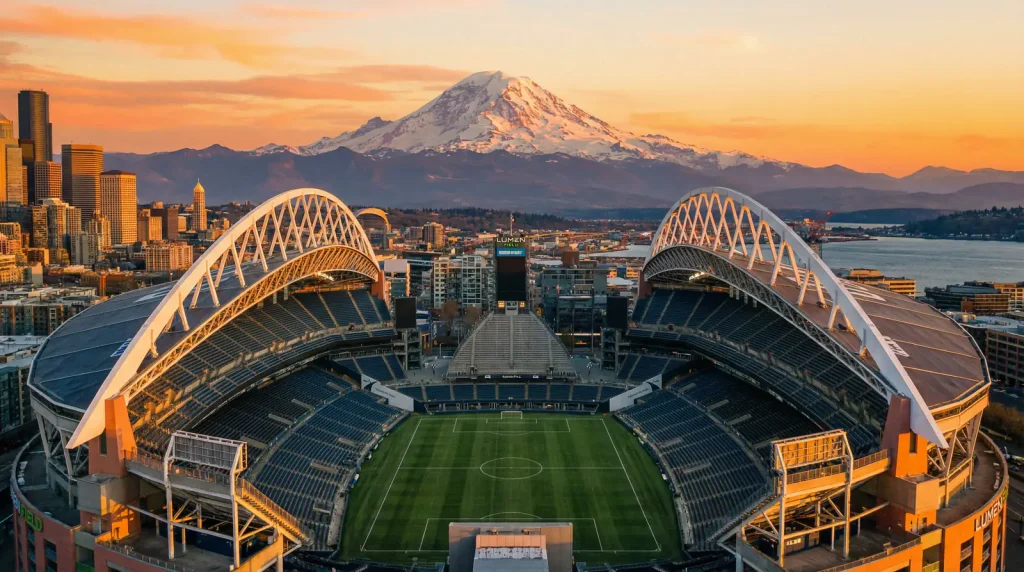
5:00 AM AEST. Thursday 19 June 2026. The United States hosts Australia at Lumen Field, Seattle — and this is the match that defines our tournament. Beat the hosts on their turf, or at minimum steal a point, and the Socceroos control their Group D destiny. Lose, and the Paraguay finale becomes elimination pressure rather than confirmation celebration. I’ve researched every detail about this venue because understanding where you fight matters as much as understanding who you fight.
Lumen Field has earned a fearsome reputation in American sports. Seattle Seahawks NFL fans generated crowd noise measured at 137 decibels — earthquake-registering levels that opposing quarterbacks cite as the most difficult away environment in professional football. The Seattle Sounders have translated that supporter culture into MLS, creating an atmosphere unique among American soccer venues. Australia walks into a cauldron. But cauldrons can be survived.
Lumen Field: Seattle’s Fortress of Noise
Capacity officially lists at 69,000 for football configurations, though World Cup seating arrangements might adjust numbers slightly. The stadium opened in 2002 as Seahawks Stadium, underwent naming rights transitions through Qwest Field and CenturyLink Field before becoming Lumen Field in 2020. None of those corporate identities matter — locals call it “The Clink” after the CenturyLink era, a nickname that endures.
What makes Lumen Field notorious is acoustic design. The partial roof covering lower bowl seating concentrates sound rather than allowing dissipation. Upper deck overhangs create additional reflection surfaces. Stadium orientation channels Pacific Northwest winds through openings, but the structural choices trap crowd noise inside. When 69,000 Americans chant for their national team, visiting players hear it in their bones.
The Socceroos faced hostile environments before — Tehran’s Azadi Stadium holds 78,000 Iranian supporters for Asian qualifying clashes; Saitama Stadium packed 63,000 Japanese fans for qualification deciders. Those experiences prepared Australia for atmosphere warfare. But Lumen Field differs in one crucial respect: the crowd genuinely believes their team can win the World Cup. Iranian and Japanese supporters expect victory; American supporters in 2026 believe they’re witnessing history. That conviction generates different energy.
Playing surface at Lumen Field uses established natural grass — unlike BC Place’s temporary installation. Seattle’s climate supports year-round growth, and groundskeeping investment matches NFL standards. Ball behaviour, footing, and surface consistency should all favour players who prefer traditional pitches. Australia’s preparation camps can replicate conditions more easily than at venues requiring artificial-to-natural conversions.
Sightlines reward lower bowl attendees with proximity, while upper deck angles provide tactical perspective. Travelling Australian supporters allocated to away sections will likely occupy corners or ends — standard FIFA protocol for neutral-hosted matches. Expect the stadium’s 90% American crowd composition to dominate sonic territory regardless of Socceroos fan efforts.
World Cup 2026 Matches at Lumen Field (AEST)
Seattle hosts six World Cup matches across group and knockout stages. Lumen Field’s elevation to major venue status reflects both Seattle’s passionate soccer culture and Washington State’s investment in hosting. For Australian punters, understanding the full schedule provides context.
| Date | Match | Round | AEST Kick-Off |
|---|---|---|---|
| Sunday 15 June | USA vs Paraguay | Group D | 8:00 AM |
| Monday 16 June | Netherlands vs Japan | Group F | 11:00 AM |
| Thursday 19 June | USA vs Australia | Group D | 5:00 AM |
| Sunday 22 June | Netherlands vs Tunisia | Group F | 8:00 AM |
| Thursday 3 July | Round of 32 Match | Knockout | TBC |
| Saturday 5 July | Round of 16 Match | Knockout | TBC |
USA plays both home matches in Seattle during the group stage — their opener against Paraguay and the critical Australia fixture. That continuity gives American players environmental familiarity across multiple fixtures. Meanwhile, Australia transitions from Vancouver (BC Place opener against Turkey) to Seattle without significant adjustment time. Logistically, both west coast cities suit Australian squad management better than cross-continent travel.
The 5:00 AM AEST kick-off for USA vs Australia falls on a Thursday morning in Australia. Dedicated punters will watch live, but casual viewers face work scheduling conflicts. Expect Australian pubs to offer early opening for this fixture — call ahead to confirm your local’s plans. Recording for breakfast viewing works, though avoiding score spoilers requires digital discipline.
Seattle: Pacific Northwest and Socceroos-Friendly Time Zone
Seattle’s position on America’s northwest coast places it in Pacific Daylight Time during June — UTC-7, fifteen hours behind Sydney. That offset creates the 5:00 AM AEST kick-off: 12:00 PM local time in Seattle, a lunchtime fixture for American audiences and pre-dawn viewing for Australians. Geography offers no compromise.
The city itself represents one of America’s most progressive and international urban centres. Boeing, Amazon, Microsoft, and Starbucks all call the Seattle metropolitan area home. Tech wealth funds cultural institutions, culinary diversity, and sporting investments that make Seattle punch above its demographic weight. For travelling Socceroos fans, the city delivers Western sensibilities with American scale.
Pike Place Market anchors tourist activity in downtown Seattle — fish-throwing vendors, local artisan stalls, and the original Starbucks location draw millions annually. Capitol Hill offers LGBTQ+ friendly nightlife and independent bars. Ballard’s Scandinavian heritage creates distinct neighbourhood character with excellent craft beer offerings. Queen Anne neighbourhoods provide elevated views of the Space Needle and Puget Sound.
Weather in mid-June typically delivers Seattle’s most pleasant conditions. The Pacific Northwest’s rainy reputation applies to winter months; June averages only 37mm of rainfall across the entire month. Temperatures hover around 18-22°C with extended daylight — sunset after 9:00 PM creates long afternoons perfect for pre-match exploration. Morning fog sometimes lingers near the waterfront but rarely persists past midday.
Transport to Lumen Field benefits from urban integration. The stadium sits in Seattle’s SoDo district, immediately south of downtown, accessible via Link Light Rail from Sea-Tac Airport and central city stations. Walking from downtown hotels takes 20-30 minutes through Pioneer Square’s historic architecture. Post-match, trains clear crowds efficiently — a contrast to suburban American venues requiring car park exodus.
Travelling Socceroos Fans: What You Need to Know
Making the journey to Seattle requires planning that accounts for cost, logistics, and atmosphere expectations. I’ve gathered practical guidance for Australian supporters considering the pilgrimage.
Flights and connections: No direct flights connect Australia to Seattle. Routing through Los Angeles (Qantas, United) or San Francisco (United) adds domestic connections. Total travel time from Sydney exceeds 20 hours including layovers. Alternatively, fly to Vancouver for the Turkey opener and road-trip or short-hop to Seattle — the cities sit 240 kilometres apart, roughly three hours driving or a 45-minute flight.
Accommodation pricing: World Cup demand inflates Seattle hotel costs significantly. Downtown properties near Lumen Field command premium pricing during tournament dates. Consider Capitol Hill or Fremont neighbourhood stays for character and value — both connect to downtown via reliable transit. Budget $250-450 AUD per night for decent accommodation.
Match tickets: FIFA’s official ticketing portal remains the only legitimate purchase channel. USA matches attract premium demand as host nation fixtures — expect Category 1 and Category 2 tickets to sell quickly. Category 3 seats offer distant but genuine views. Secondary market risks include counterfeit tickets and price gouging; official channels provide recourse if issues arise.
Local supporter culture: Seattle Sounders fans rank among MLS’s most passionate, and that culture extends to US national team support. Expect organised chanting, coordinated tifo displays, and genuine football knowledge from home supporters. The atmosphere won’t feel hostile in a threatening sense — American sports culture emphasises hospitality — but it will feel overwhelming. Socceroos chants from 5,000 travelling fans face 65,000 American voices. Volume alone doesn’t determine outcome.
Currency and costs: US dollars trade around 0.65 AUD historically, making American prices feel expensive to Australian visitors. Seattle ranks among America’s most expensive cities. Budget $25-40 USD for casual meals, $8-15 USD for beers, and $20+ USD for stadium concessions. Card payments dominate — carrying significant cash creates unnecessary risk.
Lumen Field’s Sporting Heritage
The Seattle Seahawks transformed Lumen Field into an American sports landmark. The “12th Man” supporter culture — legally disputed naming rights aside — generated documented instances of crowd noise affecting opposing team communications. Television broadcasts routinely capture sideline frustration from visiting coaches unable to call audibles against sound walls.
Seattle Sounders brought MLS credibility to the Pacific Northwest from 2009 onward. Average attendances exceeding 40,000 made Sounders one of world football’s most-watched domestic clubs outside top European leagues. Two MLS Cup victories (2016, 2019) established championship pedigree. The Emerald City Supporters create atmosphere that European observers compare favourably to Bundesliga standard.
FIFA selected Lumen Field knowing that supporter culture translates across codes. American football’s organised noise generation mirrors football terrace traditions in execution if not origin. The infrastructure for major events exists; logistics for World Cup hosting require adaptation rather than invention.
For Australia, Lumen Field represents the tournament’s biggest atmospheric challenge. BC Place offers enclosed intimacy; Levi’s Stadium (the Paraguay match) provides neutral corporate ambiance; Lumen Field delivers purposeful hostility. The Socceroos’ psychological preparation must account for 69,000 Americans willing their team forward in a stadium designed to amplify that energy.
History offers comfort, though. Australia beat Germany 2-0 at the 2010 World Cup in South Africa — a result nobody predicted against hosts’ group stage opponents. The 1974 Socceroos drew with Chile in their World Cup debut after everyone expected defeat. Underdogs with organisation and belief can survive cauldrons.
Lumen Field FAQ
Seattle Awaits the Green and Gold
Lumen Field represents the Socceroos’ defining test in Group D. Win here, and Australia proves they belong among World Cup contenders. Draw, and knockout qualification remains in Australian hands for the Paraguay finale. Lose, and hope shifts to calculator scenarios and anxious goal difference mathematics.
I’ve covered enough tournaments to know that hostile environments reveal character more than comfortable conditions. The Socceroos squad travelling to Seattle carries burden but also opportunity — few Australians ever experience playing meaningful football before 69,000 opponents. That’s a privilege wrapped in pressure.
For complete Socceroos World Cup 2026 coverage including squad analysis and odds breakdowns, check our dedicated team page. But remember Seattle. Remember Lumen Field. Remember 5:00 AM AEST on 19 June. Set your alarm. Make your coffee. Believe in green and gold when 69,000 voices say you shouldn’t.
