
Estadio Azteca: World Cup 2026 Opening Match Venue — History, Matches and AEST Times
 Available in US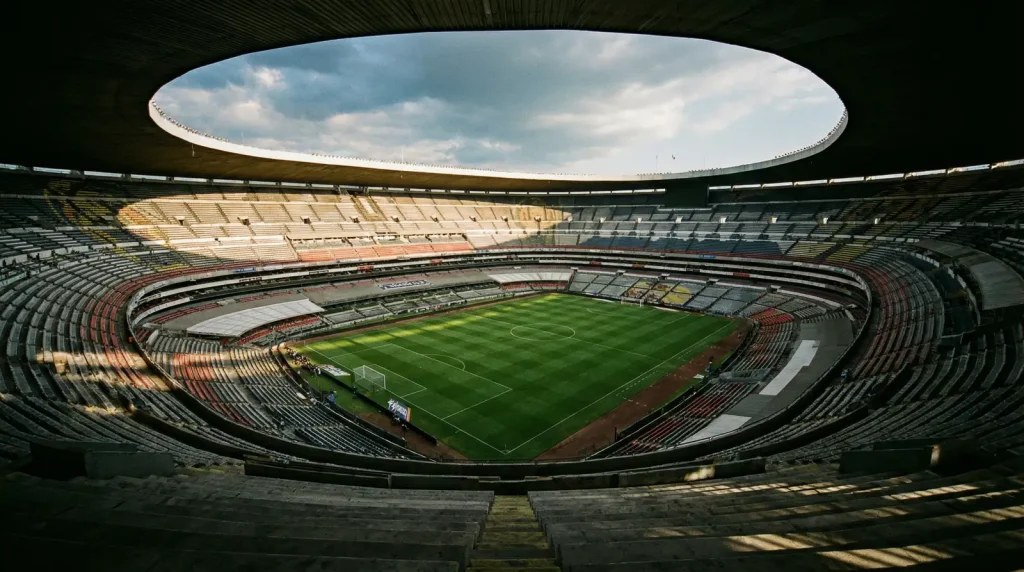
No stadium on Earth carries more World Cup weight than Estadio Azteca. When Mexico kicks off against South Africa on 11 June 2026, this Mexico City colossus becomes the first venue in history to host matches across three separate World Cups — 1970, 1986, and now 2026. For Australian punters setting alarms for the tournament opener, that kick-off lands at 9:00 AM AEST on a Thursday morning. Coffee in hand, history on screen.
The Azteca has witnessed moments that transcend sport. Diego Maradona’s “Hand of God” and “Goal of the Century” both happened here within four minutes of each other during the 1986 quarter-final against England. Pelé lifted the Jules Rimet trophy on this pitch in 1970. The stadium’s volcanic stone facade and distinctive double-bowl design have become synonymous with football at its most dramatic. Opening the 2026 World Cup here isn’t just scheduling — it’s a deliberate statement about where the sport’s greatest tournament belongs.
Three World Cups and Counting: The Azteca’s Unmatched Legacy
I’ve covered plenty of stadium histories in my years analysing football markets, but the Azteca’s CV reads like fiction. Built in 1966 specifically to host the 1970 World Cup, it opened with Mexico vs a FIFA selection in front of 107,000 fans. That original capacity, since reduced to approximately 87,000 for safety compliance, made it one of the largest purpose-built football stadiums anywhere. The name itself references the Aztec civilisation that once dominated this valley — a cultural statement embedded in concrete and steel.
The 1970 World Cup Final saw Brazil defeat Italy 4-1 here, with Pelé scoring the opener and setting up two more. That Brazilian side is still considered among the greatest ever assembled, and the Azteca provided their coronation stage. Sixteen years later, the stadium hosted another Final — Argentina over West Germany 3-2, with Maradona orchestrating everything despite not scoring himself. His infamous quarter-final performance against England four days earlier remains the most discussed individual display in World Cup history.
Between World Cups, the Azteca has served as home to Club América and Cruz Azul, hosted countless Mexico national team matches, and welcomed international acts from Pope John Paul II to Michael Jackson. The stadium’s altitude — 2,200 metres above sea level in the heart of Mexico City — creates unique playing conditions that favour acclimatised local athletes while challenging visiting teams. Thin air means the ball travels faster, players fatigue quicker, and tactical approaches require adjustment.
For 2026, the Azteca underwent significant renovations to meet FIFA’s updated infrastructure requirements. New seating, improved accessibility, enhanced broadcast facilities, and modernised hospitality zones transformed the venue while preserving its iconic silhouette. The playing surface, previously criticised during the 2016 Copa América Centenario for poor condition, now features hybrid grass technology that handles Mexico City’s unique climate challenges.
World Cup 2026 Matches at Estadio Azteca
FIFA allocated 13 matches to Mexican venues, with the Azteca claiming the most prestigious assignment: the tournament’s opening match on 11 June 2026. Mexico vs South Africa launches not just the World Cup, but the first 48-team edition in history. The symbolism of beginning this expanded tournament in the stadium that twice hosted Finals aligns FIFA’s commercial interests with football’s sense of tradition.
Here’s the complete Estadio Azteca schedule for Australian viewers:
| Date | Round | Match | AEST Kick-Off |
|---|---|---|---|
| 11 June (Wed) | Group A (Opening) | Mexico vs South Africa | 9:00 AM |
| 15 June (Sun) | Group A | Mexico vs Czechia | 5:00 AM |
| 20 June (Fri) | Group A | Mexico vs South Korea | 6:00 AM |
| 24 June (Tue) | Group Stage | Group match | 9:00 AM |
| 2 July (Wed) | Round of 32 | Knockout match | 9:00 AM |
Mexico receives home advantage across all three Group A matches at the Azteca — a significant scheduling boost that reflects their host nation status. Playing three consecutive matches at altitude, in front of 87,000 passionate Mexican supporters, against opponents who arrive just days before kick-off creates measurable advantages that bookmakers factor into their pricing. South Africa, Czechia, and South Korea all face a hostile environment compounded by physiological challenges.
The Round of 32 assignment means the Azteca’s tournament involvement extends into July, potentially hosting an elimination match featuring a Group A winner or runner-up. If Mexico tops their group as expected, they’d likely play their first knockout match elsewhere per FIFA scheduling rules — meaning the Azteca’s Round of 32 fixture probably features another nation’s do-or-die moment.
For Australian punters, every Azteca match falls within reasonable AEST morning hours. The 9:00 AM starts are ideal; the 5:00 AM and 6:00 AM kick-offs for Mexico’s second and third group games demand earlier alarms but remain watchable without destroying sleep schedules. SBS broadcasts all matches free-to-air across Australia, so no subscription barriers exist between you and the opening ceremonies.
Mexico City: Altitude, Culture and the Opening Ceremony
Hosting a World Cup in Mexico City means embracing complications that other venues don’t face. The city sits 2,200 metres above sea level in a valley surrounded by volcanic mountains, creating air pressure roughly 25% lower than at sea level. Athletes experience reduced oxygen absorption, quicker fatigue, altered ball flight, and recovery challenges that don’t exist in Dallas or Vancouver. Teams unaccustomed to altitude require acclimatisation periods of at least five to seven days for optimal performance.
The opening ceremony, traditionally preceding the first match by several hours, will transform the Azteca into a global stage showcasing Mexican culture, music, and the tournament’s themes. Previous World Cup openers featured elaborate performances — South Africa 2010’s celebration of African rhythm, Brazil 2014’s carnival spectacle, Russia 2018’s operatic ambition. Expect Mexico’s version to draw from indigenous heritage, mariachi tradition, and contemporary Mexican artistry.
Mexico City itself offers Australian visitors a culturally rich destination unlike American host cities. The capital’s centro histórico features colonial architecture, pre-Columbian archaeological sites, and world-class museums within walking distance. Chapultepec Park provides green space covering 686 hectares. The food scene spans street tacos at two in the morning to Michelin-starred restaurants reinventing regional cuisines. English proficiency varies more than in US cities, so basic Spanish helps navigation.
Travel from Australia requires connections through the United States or occasionally through Japan or South Korea. Sydney to Mexico City typically runs 20-24 hours via Los Angeles or Dallas/Fort Worth, with fares in June 2026 likely ranging A$2,500 to A$5,000 for economy class depending on booking timing. Mexico’s tourist visa policy favours Australians — electronic authorisation handles most requirements, no embassy visits needed for stays under 180 days.
Safety perceptions of Mexico City deserve nuanced discussion. The metropolitan area of 21 million people has zones ranging from extremely safe to genuinely dangerous, often just blocks apart. Tourist districts like Roma, Condesa, Polanco, and the Centro near the Zócalo maintain heavy police presence and see minimal tourist crime. Stadium transit routes will feature additional security for World Cup matches. Exercise standard urban awareness — don’t flash valuables, use authorised taxis or rideshare apps, avoid isolated areas after dark — and Mexico City delivers experiences as rich as any global capital.
Betting Angles for Azteca Matches
The opening match carries specific betting considerations beyond typical group stage analysis. Mexico vs South Africa on 11 June presents a classic host nation scenario: massive home crowd, altitude advantage, psychological pressure to deliver a statement performance, and opponents dealing with acclimatisation, jet lag, and the weight of facing 87,000 hostile fans in an opening ceremony atmosphere.
Mexico’s group odds for Group A typically show them heavy favourites to finish first, with prices around $1.50 to $1.70. South Korea and Czechia battle for second place, usually priced between $2.50 and $3.50. South Africa enter as clear underdogs for qualification, often $5.00 or longer to progress from the group. The opening match head-to-head reflects this: Mexico around $1.45, draw near $4.50, South Africa victory beyond $7.00.
Over/under markets for Azteca matches require altitude consideration. The thin air means balls travel faster, giving attackers marginal advantages on through balls and long passes. Goalkeepers struggle slightly more with trajectory reads. Historical data from Liga MX matches at altitude shows slightly higher scoring averages than sea-level competitions, though the sample involves different team quality levels. I’d lean toward over 2.5 for evening matches when temperature drops make running easier, and stay cautious on daytime fixtures when heat and altitude compound fatigue factors.
The opening match specifically tends toward tighter margins than bookmaker pricing suggests. Host nations feel pressure to win but also fear embarrassment, often leading to cautious early approaches that opponents exploit through counterattacking discipline. South Africa, with nothing to lose and everything to gain from a point, might park defensively and frustrate Mexico’s attacking rhythm. The draw at $4.50 represents value worth considering, especially with small stakes that balance the more likely Mexico victory.
For World Cup 2026 groups beyond Group A, the Azteca’s Round of 32 fixture creates opportunities depending on bracket positioning. Group winners who avoid playing at altitude in the Round of 32 gain advantages over third-place qualifiers forced to travel to Mexico City. These structural factors don’t determine matches alone, but they contribute to marginal edges that sharp punters exploit.
The Azteca’s Cultural Significance
Understanding why the Azteca matters requires grasping what football means to Mexico. This isn’t just their national stadium — it’s a spiritual home for a sport that unifies a country of 130 million across class, regional, and political divides. When El Tri plays here, the atmosphere reaches religious intensity. Green jerseys fill every seat, coordinated chants echo off the concrete bowl, and the “ola” wave begun in this stadium at the 1986 World Cup reminds everyone where that tradition started.
The stadium’s architecture deliberately invokes permanence. Unlike modern venues that emphasise sleek futurism, the Azteca’s volcanic stone exterior and terraced bowl design suggest temples and pyramids. The builders drew conscious connections to pre-Columbian structures, implying that football in Mexico carries civilisational weight. This isn’t hyperbole to Mexican fans — it’s simply how they experience their national sport.
Two statues guard the Azteca’s main entrance. One depicts an indigenous athlete from Mesoamerican ball games played centuries before Spanish arrival. The other shows a modern footballer in action. Together, they assert continuity between ancient ball sport traditions and contemporary football, a lineage that Mexican cultural institutions actively promote. Few stadiums anywhere attempt this level of historical meaning-making.
For neutral observers, the Azteca’s atmosphere delivers something American venues struggle to replicate. MLS has grown dramatically, and US soccer culture continues developing, but Mexican passion for the sport runs generations deeper. The opening match will feature coordinated displays, nonstop singing, and crowd behaviours that contrast sharply with the more subdued (though still enthusiastic) environments in American stadiums. Television broadcasts capture some of this energy; being present transmits it directly.
Maradona’s quarter-final against England in 1986 illustrates the stadium’s capacity for drama. Argentina won 2-1, with both Maradona goals becoming eternal touchstones — one for scandal, one for genius. The Azteca didn’t create that moment, but its scale and atmosphere amplified it. When Diego weaved past five English defenders for the “Goal of the Century,” he did so before 114,000 screaming witnesses in a stadium that made the achievement feel properly monumental. Great venues don’t guarantee great moments, but they provide stages worthy of them.
Where World Cups Begin
The 2026 opening match won’t carry the same individual stakes as that 1986 quarter-final, but it launches the largest World Cup ever staged. Forty-eight teams, 104 matches, three nations, six weeks — and it all begins with Mexico vs South Africa at the Estadio Azteca on 11 June. For Australian punters setting those early alarms, the history embedded in that volcanic stone bowl adds weight to every market you back. Three World Cups. Two Finals. Countless legendary moments. And on that June Wednesday, the next chapter begins.
