
BC Place Vancouver: Socceroos’ First World Cup Match Venue — Everything You Need to Know
 Available in US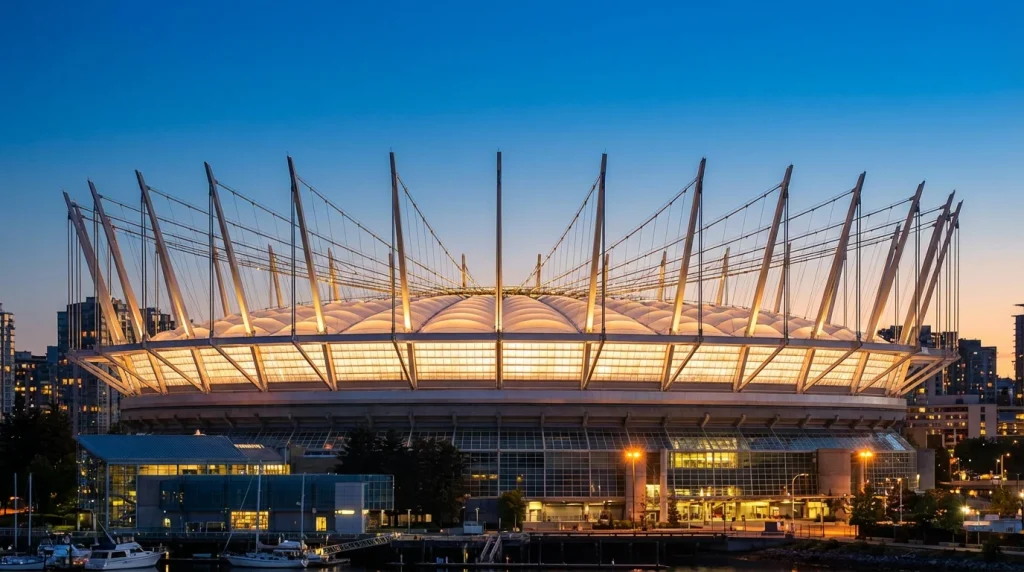
Saturday 14 June 2026, 2:00 PM AEST — that’s when Australian football history resumes. BC Place in Vancouver hosts the Socceroos’ World Cup opener against Turkey, and I’ve spent months researching this venue so you know exactly what to expect. The timing couldn’t be better for Australian punters: an afternoon kick-off on a Saturday means pubs and living rooms across the country can host communal viewing without anyone losing sleep. Now let’s talk about where this match actually happens.
Vancouver sits on Canada’s Pacific coast, closer to Sydney in flight time than most American host cities. BC Place anchors the city’s False Creek waterfront, a cable-supported retractable roof stadium that transforms from indoor arena to open-air amphitheatre within twenty minutes. For the World Cup, FIFA mandates natural grass installation over the existing artificial surface — a transformation worth following as June approaches. Everything about this venue suits the Socceroos’ first step into the 2026 tournament.
BC Place: A Retractable Roof and FIFA-Ready Pitch
I’ve seen plenty of stadiums during my years covering international football. BC Place stands out not for capacity — 54,500 seats, modest by World Cup standards — but for engineering ambition. The original 1983 air-supported dome gave way to a complete roof replacement in 2011, introducing the world’s largest cable-supported retractable roof. That renovation cost $563 million CAD and created a venue capable of hosting everything from CFL football to concerts to FIFA-sanctioned fixtures.
The roof question matters for match conditions. Vancouver’s June weather typically delivers mild temperatures (15-20°C) with occasional rain showers. FIFA prefers open-roof configurations for World Cup matches when possible, meaning organisers will monitor forecasts and decide roof positioning close to kick-off. The Socceroos face Turkey knowing conditions could range from direct Pacific sunlight to covered protection depending on weather calls.
The playing surface represents BC Place’s biggest World Cup challenge. Vancouver Whitecaps use artificial turf year-round, but FIFA requires natural grass for World Cup fixtures. Temporary grass installation — likely a modular tray system that slots over existing surfaces — transforms the stadium for tournament use. This technology worked successfully at previous tournaments but creates surface consistency questions. Players sometimes report different ball behaviour on temporary grass versus established pitches. Whether this favours Australia or Turkey depends on squad adaptation.
Sightlines from BC Place’s tiered seating suit football well. Lower bowl seats position fans close to touchlines, while upper deck angles provide tactical overview perspectives. Atmosphere generation in domed environments typically exceeds open-air equivalents — sound concentrates rather than dissipating. Expect the Australia-Turkey fixture to feel louder than the official attendance suggests.
World Cup 2026 Matches at BC Place (AEST Schedule)
BC Place hosts five World Cup matches across the group stage — four group fixtures plus a Round of 32 knockout tie. For Australian punters, understanding the full schedule contextualises the venue’s tournament role.
| Date | Match | Round | AEST Kick-Off |
|---|---|---|---|
| Saturday 14 June | Australia vs Turkey | Group D | 2:00 PM |
| Sunday 15 June | Canada vs Switzerland | Group B | 8:00 AM |
| Thursday 19 June | Paraguay vs Turkey | Group D | 5:00 AM |
| Sunday 22 June | Canada vs Qatar | Group B | 10:00 AM |
| Thursday 3 July | Round of 32 Match | Knockout | TBC |
The Socceroos’ fixture kicks off the group stage for Group D — meaning Australia plays before knowing USA vs Paraguay’s result from later that day. Turkey’s second match against Paraguay also occurs at BC Place, giving Turkish fans two Vancouver trips within a week. If you’re punting live on Australia’s opener, note that BC Place’s acoustics might amplify crowd reactions that streaming microphones capture — useful for gauging momentum shifts in close matches.
Canada plays twice at BC Place, creating home advantage dynamics worth noting. Vancouver’s large Turkish-Canadian community could also influence crowd composition for the Socceroos’ fixture. Don’t expect pure neutral atmosphere — immigrant communities travel for World Cup matches, and both Australia and Turkey have significant Canadian diaspora presence.
Vancouver: The City, the Time Zone and What to Expect
Pacific Standard Time puts Vancouver three hours behind the US East Coast and fifteen hours behind Sydney. That time difference creates the 2:00 PM AEST kick-off I keep celebrating — midnight local time in Vancouver becomes manageable Australian afternoon viewing. Geography saves Socceroos fans from dawn alarms.
Vancouver itself ranks among North America’s most liveable cities. The downtown core sits within walking distance of BC Place, with hotels, restaurants, and waterfront amenities clustered around False Creek. Stanley Park offers parkland escape, Granville Island delivers artisan markets and craft breweries, and mountain views form constant backdrops. Travelling Socceroos fans won’t struggle for entertainment between matches.
Weather in mid-June typically delivers Vancouver’s best conditions: long daylight hours (sunset after 9:00 PM local), comfortable temperatures, and reduced rainfall compared to the region’s notoriously wet winters. Morning fog sometimes blankets the harbour before burning off by noon. Match-day conditions for the 9:00 PM local kick-off should be excellent — cool evening air, clear skies, perfect for football.
Transport to BC Place from downtown Vancouver involves minimal effort. SkyTrain’s Stadium-Chinatown station deposits fans directly outside the venue. Ride-share services operate legally citywide. Walking from central hotels takes 15-20 minutes along the seawall. Unlike some North American stadiums located in suburban parking deserts, BC Place sits in urban context — leaving the match means immediate access to bars, restaurants, and public transport.
Tips for Aussie Fans Travelling to Vancouver
If you’re making the journey — and thousands of Socceroos supporters will — practical preparation maximises the experience. I’ve compiled guidance based on conversations with Australian fans who’ve attended previous North American tournaments and local knowledge from Vancouver-based contacts.
Accommodation: Book early. World Cup demand inflates Vancouver hotel prices significantly, with downtown properties filling months in advance. Consider Airbnb rentals in neighbourhoods like Kitsilano or Commercial Drive — both offer character, local dining, and reliable transit to BC Place. Budget $300-500 AUD per night for decent accommodation during tournament dates.
Match tickets: FIFA’s official ticketing portal remains the sole legitimate source. Secondary markets exist but carry fraud risks. Category 3 tickets (upper deck seating) typically cost the least while still providing solid views. Category 1 prices escalate sharply. Purchase through FIFA’s platform, link tickets to your FIFA account, and carry digital confirmation plus physical ID on match day.
Fan gathering points: Australian consulate representatives coordinate Socceroos supporter meetups before matches. Traditional gathering spots emerge organically — expect announcements via Football Australia channels closer to the tournament. Granville Street’s bar strip and Yaletown’s restaurant precinct both host football-friendly venues likely to welcome travelling fans.
Currency and costs: Canadian dollars trade close to AUD parity historically, simplifying mental conversions. Card payments dominate — carrying CAD cash matters less than ensuring your debit/credit cards don’t incur foreign transaction fees. Vancouver food and drink prices match or exceed Sydney levels. Budget accordingly.
Getting there: Direct flights connect Sydney to Vancouver in approximately 14 hours. Qantas, Air Canada, and United operate routes. Book early for June availability. Alternatively, connect through Los Angeles or Auckland with respective carriers. June represents peak travel season; flexibility on dates reduces airfare.
Time zone adjustment favours Australia-to-Vancouver travel. Flying east loses hours but the 15-hour difference means landing in Vancouver on the same calendar day you departed Sydney (crossing the date line helps). Most travellers adapt within 48 hours, though the first day’s fatigue hits hard. Arrive two days before the Turkey match if possible.
Stadium History and Past Events
BC Place opened in 1983 as Canada’s first covered stadium, designed primarily for the BC Lions (Canadian Football League) and Expo ’86. The original air-supported dome became iconic — a white puffy roof visible across Vancouver’s skyline until the 2011 renovation replaced it with the current retractable structure.
Football history at BC Place includes the 2015 FIFA Women’s World Cup final, where USA beat Japan 5-2 in front of 53,341 fans — the largest attendance for a FIFA Women’s World Cup final at the time. That tournament demonstrated BC Place’s capability for major football events and established operational precedents FIFA organisers can reference.
Vancouver Whitecaps have called BC Place home since joining MLS in 2011. The artificial turf suits their year-round schedule but limits international football hosting. Each time natural grass gets installed for events, logistics teams learn efficiencies that benefit future installations. By 2026, BC Place will have hosted enough grass-surface events to streamline the World Cup transition.
Concerts, Rugby Sevens World Series events, and special sporting fixtures round out BC Place’s hosting resumé. The 2010 Winter Olympics used BC Place for opening and closing ceremonies — a global television audience exceeding three billion people watched events staged in this exact venue. Scale doesn’t intimidate BC Place operations.
For the Socceroos, BC Place represents opportunity. Australia’s 2015 Asian Cup triumph occurred at Stadium Australia — a venue of similar retractable-roof ambition. If superstition counts for anything, enclosed atmospheres suit Australian knockout performances. The psychological parallel might comfort nervous fans, even if stadium architecture doesn’t actually influence outcomes.
BC Place FAQ
The Stage Is Set in Vancouver
BC Place gives the Socceroos everything they could ask from a World Cup opener venue: convenient timing for Australian viewers, established football hosting credentials, world-class facilities, and a city that welcomes international visitors warmly. The match against Turkey on 14 June represents more than ninety minutes of football — it’s Australia’s first step into a tournament that could define a generation.
I’ll be watching from a different time zone, coffee in hand, heart rate elevated, analysing every moment. For those making the trip to Vancouver, the experience promises memories regardless of result. For those watching from Australian pubs and living rooms, the 2:00 PM Saturday slot is a gift. Take advantage.
The full Socceroos World Cup 2026 preview covers squad analysis, odds breakdowns, and match-by-match predictions. But BC Place is where it starts. Know the venue. Understand the context. Back the green and gold.
